
Youn Yuh-jung’s Desperate Days as an Extra (feat. Turning Crisis into Opportunity)


"An actor performs best when they are desperate for money. The reason I was able to act with such soul was to feed my starving family."
We often think of Youn Yuh-jung as "Korea’s first Academy Award-winning actor" and "the epitome of a candid, cool elder." Even past seventy, her biting wit and razor-sharp humor command the global stage, making her appear like a natural-born genius who was always at the top.
However, she too had a time of bitter hardship—enduring humiliation and worrying about basic survival day after day. Today, we trace five pivotal places where Korea's greatest actor had to crush all her pride and stand before the camera just to feed her two sons.
By the end of this story, you will discover the 'true driving force' that sustained her 50-year acting journey.
Location 1. A Genius Actor in Her 20s Declares Retirement (Early 1970s)
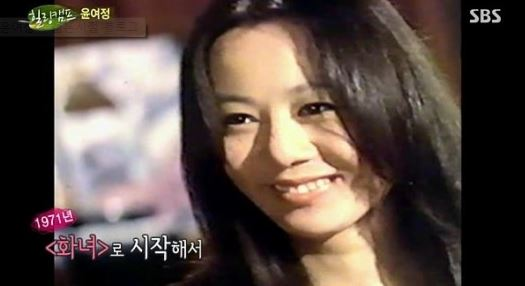
Upon her debut in the movie Woman of Fire, she swept prestigious film awards, hailed as the undisputed genius actor of her era. Yet in 1974, at the height of her glory, she abruptly announced her retirement upon marriage and left for the United States.
Stepping away from the dazzling spotlight, she chose the life of an ordinary homemaker, believing it would be her perfect happy ending. But 13 years later, that belief was shattered into pieces.
What she faced during this period was the unpredictability of life—the harsh reality that love and tranquil daily life, which seemed eternal, could dissolve overnight like a mirage.
Location 2. A Broadcast Station Waiting Room Stamped with the Scarlet Letter of a Divorcee (1984)

When she returned to Korea after her divorce, Korean society greeted her with brutal coldness. In those days, being a 'divorcee' was an indelible scarlet letter. Viewers flooded networks with complaints saying, "Youn Yuh-jung shouldn't appear on TV as a divorcee," and directors hesitated to cast her.
The brilliant genius actor was now reduced to an unwelcome intruder in the corner of waiting rooms, enduring cold stares. Yet she did not run away, because the survival of her two young sons rested solely on her shoulders.
It was here that she came to a painful realization: 'I am no longer an elegant star. I am a breadwinner who must do whatever it takes to feed my children.'
Location 3. Casting Aside Pride to Take On Country Bumpkin Roles (Late 1980s)
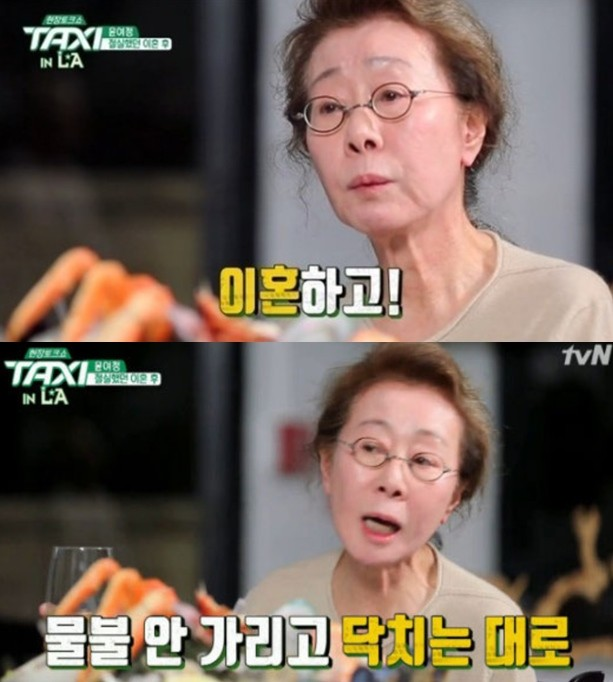
Having once played only leading roles, the scripts offered to her were now mere extras, unsophisticated country women, or villains harassing the main characters. To those who remembered her past glory, it looked like a tragic downfall.
Yet she never turned down a role. Dignity and pride were luxuries she couldn't afford. "If I didn't have children, I wouldn't have done it. Feeding them was fulfilling my duty." Looking back on those days years later, she confessed that it was her 'starving stomach' that enabled her to act with such raw soul.
What she demonstrated on set was clear: A true professional isn't someone who debates high art, but someone who quietly fulfills their job in the face of brutal survival.
Location 4. A Pre-Dawn Room Spent Memorizing Lines Endlessly (Ongoing)
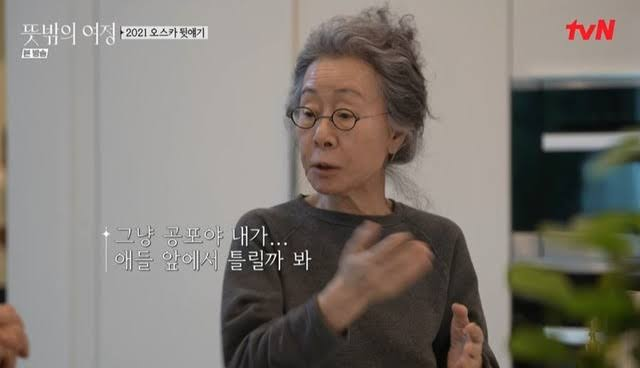
On a recent entertainment show, she calmly shared her secret to memorizing lines with younger actors: "There's no other way than foolishly memorizing them. Is there any secret shortcut? There are no shortcuts."
Even with decades of experience, she never relies on luck. Until she masters every line, she wrestles with scripts all night into the dawn. This isn't because she possesses a genius memory, but because the desperation of her struggling years—where a single mistake threatened her livelihood—remains deeply etched in her bones.
What we learn inside this room is undeniable: What builds true greatness isn't 'born talent,' but 'stubborn diligence' that rejects shortcuts and repeats the work relentlessly.
Location 5. "You Must Be Strong to Support Others" (Recent Interview)

She understands the value of a supporting actor better than anyone.
"I said that supporting someone makes you a great person. To support others, you must be confident and secure in yourself. You have to be strong to support others."
When pushed out of the spotlight, instead of wallowing in frustration, she redefined the meaning of a supporting role. The moment she abandoned the desire to be the center and sturdily backed others, her performance radiated an unmatched aura that dominated the entire screen.
What this stage proves is extraordinary: the overwhelming competence and poise to humble oneself as a supporting role made her an irreplaceable, one-of-a-kind actor.
Epilogue
What allowed her to endure the pain of divorce and social prejudice wasn't lofty self-hypnosis like 'I am an artist.' Rather, it was a sober reality check: 'I am a working-class actor who must feed her children.'
Rooted deep in her acting is 'responsibility for survival.' Those painful hours spent swallowing tears in waiting-room corners under the glare of public judgment—she broke through them head-on with blood, sweat, and performance.
In the next part, we will explore how a struggling actor who moved from extra role to extra role went on to lift an Academy Award trophy, captivating the entire world with her cool and sharp life philosophy.