
The Audacity to Bet It All: Inside Masayoshi Son's Wildest Gambles (Part 2)

(While the world laughed at the humiliation of WeWork, he held a $100 billion ace quietly up his sleeve.)
"Only those who push all their chips onto the table when everyone else screams madness get to turn the page of history."
November 6, 2019. The auditorium at SoftBank headquarters in Shiodome, Tokyo.
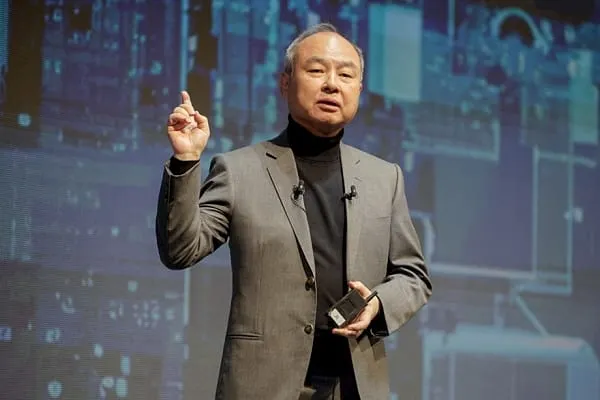
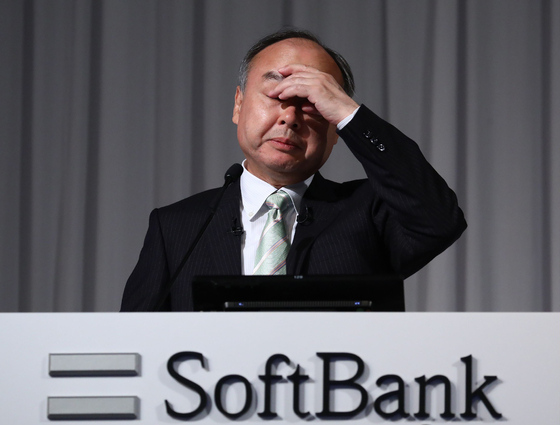
Under the harsh glare of hundreds of camera flashes, Masayoshi Son walked onto the stage with measured steps. The figure beamed onto the giant projection screen sent shockwaves across global financial markets: an operating loss of 704.4 billion yen ($6.5 billion) for a single quarter. The company’s annual loss was spiraling toward a catastrophic $30 billion.
Global media mockery hit a fever pitch. WeWork—the crown jewel of SoftBank's ambitious $100 billion Vision Fund—was imploding under rampant corporate waste and fraudulent governance, pulling its IPO. Commentators tore him to shreds: "Masayoshi Son has lost his golden touch," "The hubristic collapse of a deluded gambler."
Gripping the lectern, Son bowed deeply before the cameras: "A raging storm is battering us. My judgment was flawed and blind. I am doing deep, painful soul-searching."
Yet beneath that ninety-degree bow, the fire in his eyes had not died. During the Q&A, his voice dropped to a quiet, unshakeable register: "My vision has never wavered. When the tide rolls out, the real treasure reveals itself."
Pundits wrote him off, insisting the era of Masayoshi Son was buried beneath a $30 billion crater. But four years later, he was orchestrating one of the most audacious counterattacks in modern tech history.
Here are five moments when Masayoshi Son pushed unthinkable sums of capital into the center of the table—and how wagering everything at the inflection points of history separates kingmakers from onlookers.
1. Twenty Minutes in a Shabby Hotel Lounge to Write a $20M Check (1999, Beijing)
In the autumn of 1999, right before the dot-com bubble burst, Son’s gaze shifted beyond Japan toward mainland China.
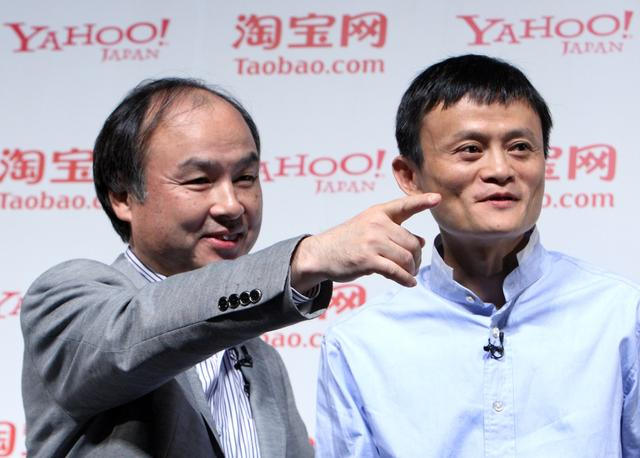
Inside a run-down hotel lounge at Beijing's University of International Business and Economics, twenty fledgling Chinese entrepreneurs lined up for a five-minute pitch with Son. At the tail end of that line stood a gaunt former English teacher named Jack Ma, who had just launched a modest B2B website called Alibaba from a cramped apartment in Hangzhou.
Ma pulled out his deck and began speaking. Not six minutes in, Son cut him off.
"Put the business plan away. How much money do you need?"
Startled, Ma replied: "We already raised $5 million from Goldman Sachs. We don't need big money right now."
Son smiled with that unmistakable glint in his eye: "No. You need to spend much more. Take $20 million of my money."
There were no audited balance sheets or discounted cash flow analyses. Son bet on the predatory hunger radiating from Ma’s eyes, and the sheer explosive force of pairing the internet with a billion people in China.
Silicon Valley investors whispered that Son had lost his mind backing an unproven Chinese venture with an outsized check. Twenty years later, that $20 million blossomed into an unprecedented $80 billion harvest, cementing SoftBank’s war chest.
Calculators never catch tectonic shifts. Miracle returns come from recognizing animal spirits and betting the farm on the right human being.
2. A Crude Sketch Carried Into Steve Jobs's Secret Room (2005, Cupertino)
While Alibaba grew quietly in China, another storm brewed in Son's mind.
In the early 2000s, the world surfed the web on bulky desktop PCs. Son knew the internet was about to shrink into the palm of every human hand. The hurdle: Japan’s mobile market was a closed Galapagos of feature phones. To shatter that stalemate, he flew directly to Apple’s headquarters in Cupertino.
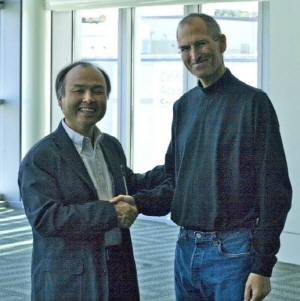
Son walked into a confidential meeting carrying a hand-drawn sketch: an iPod wired with mobile calling capabilities.
Steve Jobs glanced at the paper and smirked:
"Masa, put that away. We're already secretly building it."
Son didn't blink:
"Then promise me one thing: when it ships, give me exclusive carrier rights in Japan."
Jobs stared at him, incredulous: "Masa, you don't even own a mobile carrier."
Son's answer was instant: "I will buy one. Just give me your word."
Returning to Tokyo, Son immediately executed. He announced the acquisition of Vodafone Japan—a debt-laden, bleeding carrier on the brink of collapse—for 1.75 trillion yen ($15 billion). The deal exceeded SoftBank’s entire market capitalization. Pundits and analysts called it corporate suicide.
In 2008, when the iPhone landed in Japan, the jeers turned dead silent. SoftBank transformed from a third-rate cellar-dweller into the vanguard of the mobile revolution, unseating the long-ruling monopoly NTT Docomo.
When a tsunami approaches, you don't rent a rowboat; you empty your bank accounts to buy an aircraft carrier.
3. Stealing 45 Minutes from a Saudi Crown Prince to Raise $100B (2016)
Even dominating Japanese telecom failed to satisfy Son's ambition.
As smartphone penetration crested, his vision reached further: a world where every physical machine was connected, and artificial intelligence surpassed human intellect. Traditional $1 billion venture funds were water pistols against that scale. To rewrite the rules rather than play by them, Son needed an unprecedented war chest.
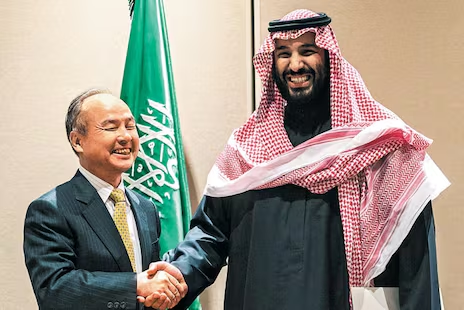
In autumn 2016, Son invited Saudi Arabia’s Crown Prince Mohammed bin Salman (MBS) to his estate in Woodside, California.
The target number placed in front of MBS shattered venture precedent: $100 billion—larger than the entire Silicon Valley VC pool combined at the time. When an astonished MBS asked why, Son redefined Saudi Arabia’s geopolitical destiny in 45 minutes:
"The age of oil is dead. The entity that controls data will monopolize human wealth. A $1 billion fund cannot move the needle. We need $100 billion to corner the global infrastructure of AI and mobility in one sweep."
By the end of that meeting, MBS committed $45 billion on the spot. The largest capital leviathan in financial history—the SoftBank Vision Fund—was born.
Son carpet-bombed the world's leading platforms: Coupang, Uber, Grab, ByteDance. By inflating round sizes beyond imagination, he starved out competitors and forced the global tech landscape to reorganize around SoftBank.
4. Swallowing the $30 Billion Shame with a 90-Degree Bow (2019–2022)
The brighter the sun, the darker the shadow. Drunk on $100 billion in dry powder, Son walked into a colossal trap.
Hubris convinced him that everything he touched turned to gold. Then WeWork unravelled. Founder Adam Neumann's wild governance, questionable accounting, and massive burn were laid bare. The company's valuation cratered 90% overnight, and its IPO collapsed.
Then COVID-19 hit. Stocks across SoftBank’s portfolio—Coupang, Uber, DoorDash—plunged in tandem. By 2022, SoftBank posted an annual loss of over $30 billion, the worst in Japanese corporate history.
Wall Street, which once treated him as a visionary guru, turned venomous, labeling him a broken speculator.
Son refused to hide behind PR statements. He stepped onto the press stage in Tokyo and bowed at a ninety-degree angle:
"My judgment was arrogant. I was blinded by a founder's illusion."
He took full ownership of the defeat. Then, quietly, he went to work. He sold down chunks of Alibaba to stack tens of billions in hard cash. He froze new Vision Fund investments and battened down the hatches. A true gambler is not someone who never loses, but someone who swallows public humiliation whole and protects their chips for the next hand.
5. The $100 Billion Chip Weapon That Engineered the AI Counterattack (2023–2026)
While commentators celebrated his demise among the wreckage of WeWork, Son held one final ace.
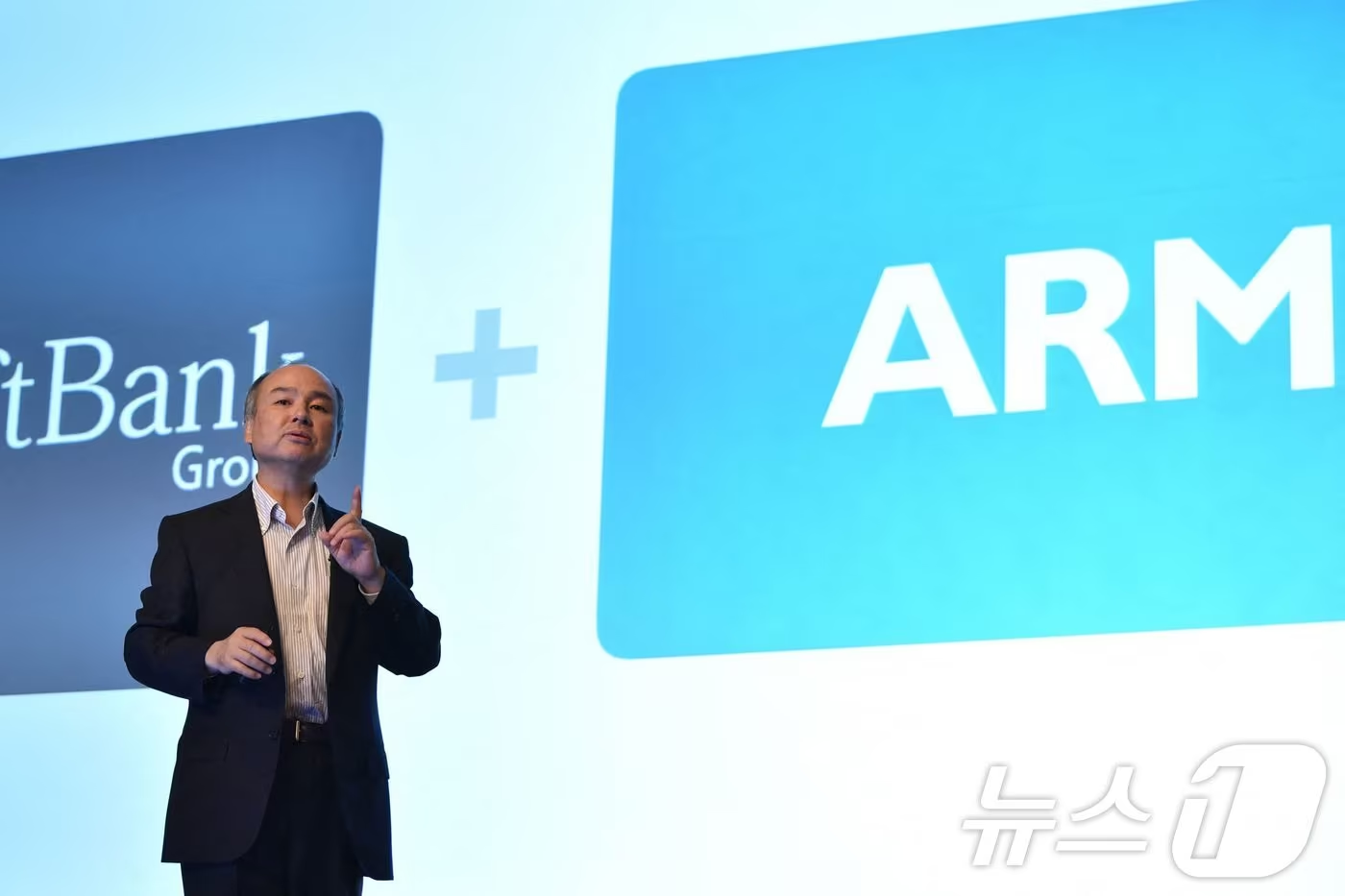
In 2016, right before launching the Vision Fund, Son spent $32 billion—almost all of SoftBank's liquid capital—to acquire UK semiconductor designer ARM. Critics scoffed that mobile chips were a mature, low-margin business. In 2020, cash-strapped, Son tried to sell ARM to Nvidia, only for global antitrust regulators to block the deal.
Then ChatGPT sparked the generative AI explosion, and the board flipped entirely. The tech world woke up to an undeniable reality: Nvidia's AI accelerators, Apple's silicon, and 99% of global smartphones all run on ARM’s architecture.
In September 2023, ARM listed on the Nasdaq, rocketing past a $100 billion valuation. SoftBank reclaimed tens of billions in liquidity and seized a stranglehold over the foundation of AI infrastructure.
In summer 2024, standing before SoftBank shareholders in Tokyo, Son choked back tears:
"I have cried every night for the past few years, asking myself why I was born. Now I have my answer. The first half of my life was just a warm-up. Building Artificial Superintelligence (ASI)—ten thousand times smarter than human intellect—is the true mission of my existence."
Unmoved by quarterly scorecards, the infrastructure seed he planted thirty years out had matured into a giant that holds the pulse of the AI era.
Epilogue: When Do You Push Your Chips?
Masayoshi Son is not an unblemished hero. He has been arrogant, misjudged founders, burned billions, and bowed in disgrace before the cameras of the world.
What separates him from conventional executives is simple: he never sought peace in the comfort zone.
Most founders and investors downsize their vision and trim their bets to avoid pain. You might dodge scars that way, but you will never bend history to your will.
Son's question to founders cuts deep: Are you standing in your comfort zone haggling over safe margins, or are you preparing to push your entire life's chips onto the table when your moment arrives?
The massive tides of history always flow toward the wildest bets.
※ Fact Check Note: This narrative reconstructs documented public records: the 1999 twenty-minute meeting and $20M investment in Jack Ma; the 2005 secret meeting with Steve Jobs and the $15B acquisition of Vodafone Japan; the 2016 launch of the $100B Vision Fund with Prince MBS; the 2019–2022 WeWork write-downs and press conferences; the 2016 acquisition of ARM and its 2023 Nasdaq IPO; and Son's public declarations on ASI.