
Even a $4 Billion Empire Started with Failure: The Making of Bongjin Kim


"Never imitate slick, A-list polish. When you forge a culture in your own playful dialect, you create a brand monopoly that no amount of corporate capital can buy."
In February 2021, a new pledge appeared on the official website of The Giving Pledge—the elite philanthropic club reserved for the world’s wealthiest individuals.
Standing alongside signatures from Bill Gates, Warren Buffett, and Mark Zuckerberg was the first South Korean signatory, committing to give away more than half his wealth—hundreds of millions of dollars—back to society.
That signatory was Bongjin Kim, founder and chairman of Woowa Brothers, the company behind Korea's ubiquitous food-delivery app, Baedal Minjok (Baemin).
Having sold his company to Delivery Hero at an astonishing $4 billion valuation, reaching the pinnacle of startup success, Kim chose to direct his fortune back into the world rather than hoard it.
Seen only in this triumphant light, he looks like a quintessential elite executive who mastered orthodox corporate strategy and capital markets from day one.
"I never studied traditional business administration. I simply looked at the absurdities of the market through a designer’s lens, planting culture into everyday life with our own brand of playful humor."
Behind his victory lies an insecure junior-college graduate, a shattered handmade-furniture venture drowning in hundreds of thousands of dollars of debt, and endless nights digging through curbside trash cans to collect takeout flyers.
Here are five pivotal places that shaped Bongjin Kim—a designer who dismantled rigid management theory, conquered corporate tech giants with unapologetic B-grade kitsch, and built one of Asia's most iconic consumer brands.
By the end of this piece, you will see why refusing to copy someone else’s playbook and defending your unique voice is the most durable brand moat in business.
1. The Quiet Resolve of a Non-Elite Designer (1990s, Suyu-dong & Small Design Studios)

Born in 1976 on the southern island of Wando, Kim moved to Suyu-dong, a working-class northern neighborhood of Seoul, as a boy. His parents ran a modest eatery inside a furniture market, and the family lived packed into a cramped single room in the back of the shop.
While graduates from prestigious art universities climbed the corporate ladder, Kim earned a two-year degree in commercial art from Seoul Institute of the Arts. Grinding through brutal, unpaid overtime at boutique design shops, he looked around and saw a field dominated by pedigreed elites.
"With my credentials, playing by their rules is an automatic loss." He shied away from the spotlight, but an instinct hardened inside him: he could not walk the well-trodden path. He had to sharpen a designer’s idiosyncratic lens, observing the world from an angle no elite could replicate.
The lesson from those early trenches was simple: never compete on someone else's credentials track. A grounded perspective built from the ground up will outlast any institutional pedigree.
2. Foreclosure Notices and Crushing Debt in a Studio Apartment (Mid-2000s, Yeongdeungpo)
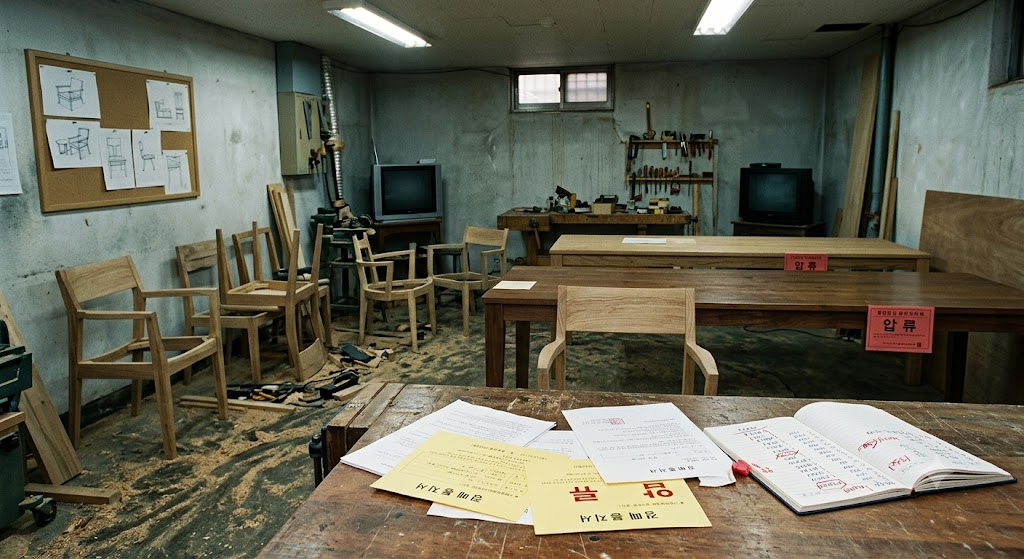
Pouring in his hard-earned savings alongside hefty bank loans, Kim launched his first venture: a bespoke furniture studio. The market’s verdict was merciless. The naive assumption that good aesthetics alone guarantee sales collapsed into hundreds of millions of won in debt.
Bailiffs seized his inventory with red auction tags, and creditor calls started every morning before sunrise. As a father of a young child, stepping outside his front door felt paralyzing. Trapped in a stifling Yeongdeungpo studio apartment, he confronted a painful reality: his products had zero connection to real customer lives.
His romantic dream of being a celebrated design auteur was shattered. Approaching forty, he carried the stigma of a bankrupt failure.
Yet out of that wreckage came his foundational business insight: purely ornamental design is powerless. Only products that solve acute daily friction and weave themselves into people's actual routines survive.
3. Digging Through Trash Cans for Delivery Flyers (2010, Gangnam)
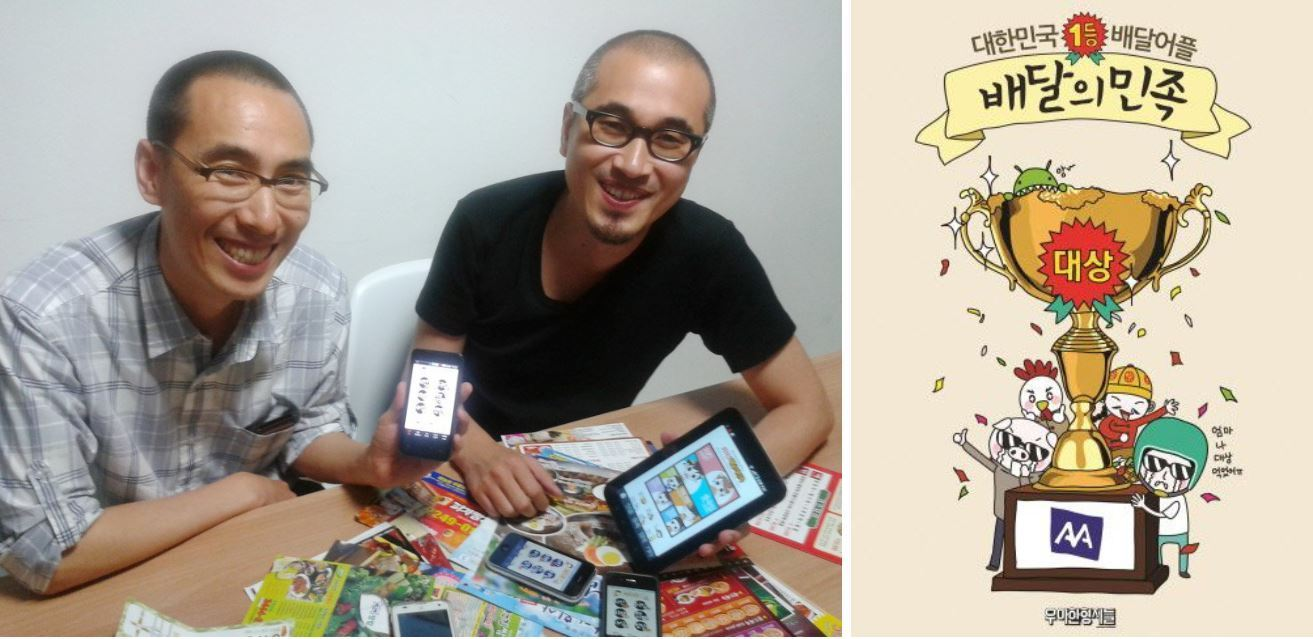
Working day jobs to service his debt, Kim watched the smartphone revolution arrive with the iPhone. An idea struck: what if we put restaurant delivery flyers inside an app? Alongside a small crew, he hacked together an early prototype for Baedal Minjok.
With zero capital, collecting merchant data meant relentless, unscalable grunt work. Night after night, Kim roamed the streets of Gangnam and Sinchon, fishing crumpled paper menus and flyers out of curbside trash bins and apartment recycling piles.
Acquaintances scoffed: "Look at this hotshot designer picking trash off the street." Unfazed, Kim dragged garbage bags full of flyers home and manually keyed thousands of telephone numbers and menus into the database by hand.
From that pavement came two core startup truths: First, authentic market data lives in the unglamorous grit that others find beneath them. Second, enduring businesses are not born from clever brainstorming sessions, but from the willingness to do things that don't scale.
4. Disarming Tech Giants with B-Grade Kitsch and Free Fonts (Mid-2010s, Seokchon Lake HQ)
As the on-demand food sector exploded, corporate giants like Naver, Kakao, and deep-pocketed global conglomerates poured tens of millions into marketing blitzes. In a pure capital war, Baemin faced extinction.
Kim launched an asymmetrical counterstrike: "We won't fight them with money. We will fight them with what we do best: design and B-grade culture."
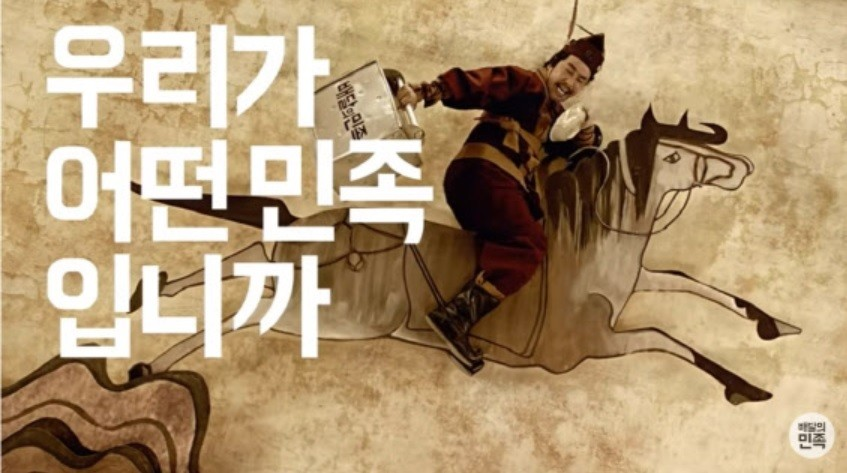
Instead of slick, polished corporate ads, Kim created custom, quirky typography—the Hanna and Jua fonts—and distributed them entirely free to the public. He blanketed bus stops nationwide with self-deprecating Renaissance parodies asking, "What kind of people are we?" Through novelty brand merchandise, he infused everyday pop culture with irreverent humor.
His thesis held: if you cannot be a pristine, corporate A-list brand, become the most delightful, self-aware B-grade cultural movement. By refusing to adopt corporate polish and doubling down on eccentric wit, Baemin built a cult following that capital-rich competitors couldn't touch.
5. Redefining Work Culture on an Office Wall (2017)
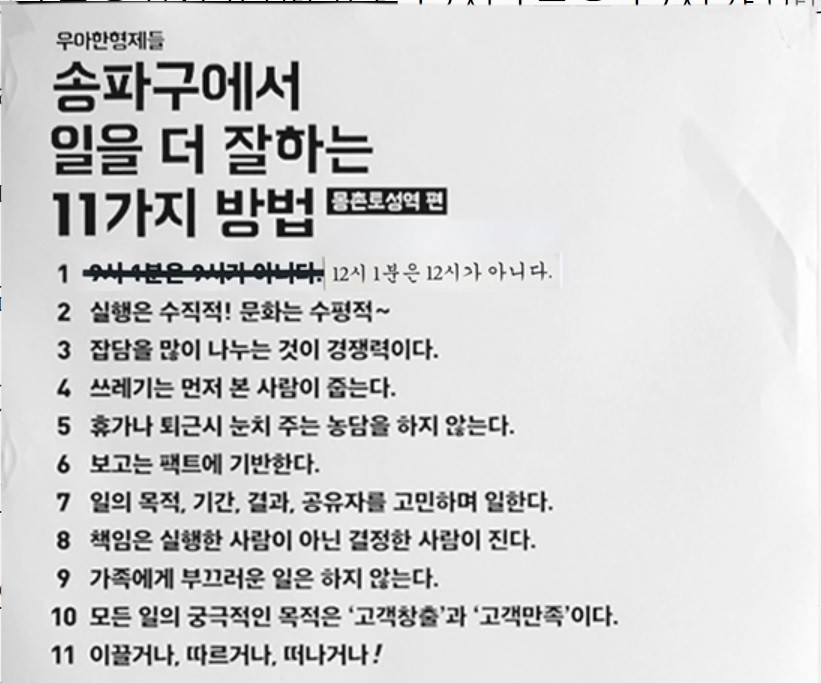
As the team swelled to hundreds of employees, Kim pasted an iconic poster across the office walls: 11 Ways of Working in Songpa-gu.
"9:01 is not 9:00."
"Casual chatter is a competitive advantage."
"Execution matters more than reporting facts."
Instead of dense employee handbooks, Kim created explicit, witty behavioral guidelines that staff could practice daily. It became a cultural operating system so distinctive that companies across Asia flew in to benchmark it.
The takeaway etched into that wall was clear: organizational strength does not stem from abstract management textbooks, but from a shared cultural OS that members genuinely enjoy living out.
Epilogue: Turning Idiosyncrasy Into a Moat
We often assume successful founders must possess elite degrees and master textbook corporate strategies.
Bongjin Kim’s journey shatters that myth.
An obscure designer with a two-year degree, a father weeping in a tiny studio over crushing debts, an entrepreneur collecting greasy flyers from curbside trash cans—Kim never hid his designer instincts or his affinity for B-grade humor. Instead, he weaponized that playfulness against corporate giants, forging a category of one.
His life offers a timeless lesson: even if your perspective clashes with conventional definitions of success, the moment you find the context to weaponize your idiosyncrasies, you create a genre all your own.
In Part 2, we will look at why Kim chose to pledge half his fortune after a $4 billion exit, tracing his philosophy of giving—from free fonts to The Giving Pledge.
※ Fact Check Note: The factual events in this dispatch—Bongjin Kim’s degree from Seoul Institute of the Arts; the failure of his bespoke furniture business and resulting debt; founding Woowa Brothers in 2010 and collecting flyers by hand; the free distribution of Hanna and Jua fonts; the "What Kind of People Are We?" advertising parodies; and the "11 Ways of Working in Songpa-gu" culture OS—are drawn from public autobiographies, verified press interviews, and official records.