
Losing $70 Billion and Never Flinching: The Making of Masayoshi Son

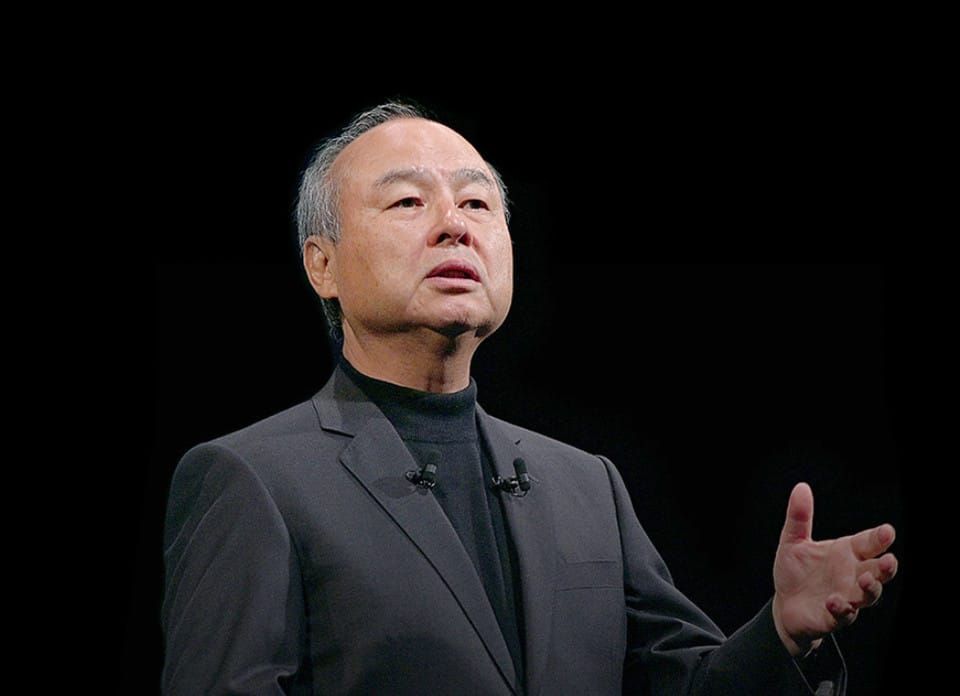
"A thirty-year vision forged in the gutter cannot be broken by bad luck or bankruptcy."
1981, Fukuoka, Japan. Inside a drafty, rundown warehouse with wind whistling through cracked walls, an upturned apple crate sat on the cold concrete.
A slight, twenty-four-year-old man dusted it off and stepped on top. Facing him were two part-time hires, recruited just days earlier on an hourly wage, staring back blankly. The young man fixed his eyes on the empty air, veins bulging in his neck:
"Our company will pass 10 billion yen within five years. And before long, we will count our revenue in trillions—like a vendor tallying blocks of tofu: one trillion, two trillion!"
The part-timers were terrified. The young man's gaze was burning with an intensity that bordered on unhinged.
The outcome surprised no one. Within two weeks, both workers vanished into the night, convinced their boss had lost his mind. In the empty warehouse, only the apple crate and the dust remained.
Today, the world knows Masayoshi Son as a global tech kingmaker commanding hundreds of billions in capital. But his early years looked nothing like a glossy success story. They were a grueling slog through poverty, xenophobia, terminal illness, and a crash that wiped out $70 billion of his net worth almost overnight.
Here are five crucible moments that forged the man on that apple crate—and how an unwavering vision carried him through every catastrophe.
1. Stones in an Unmapped Shantytown (1960s, Tosu, Saga Prefecture)
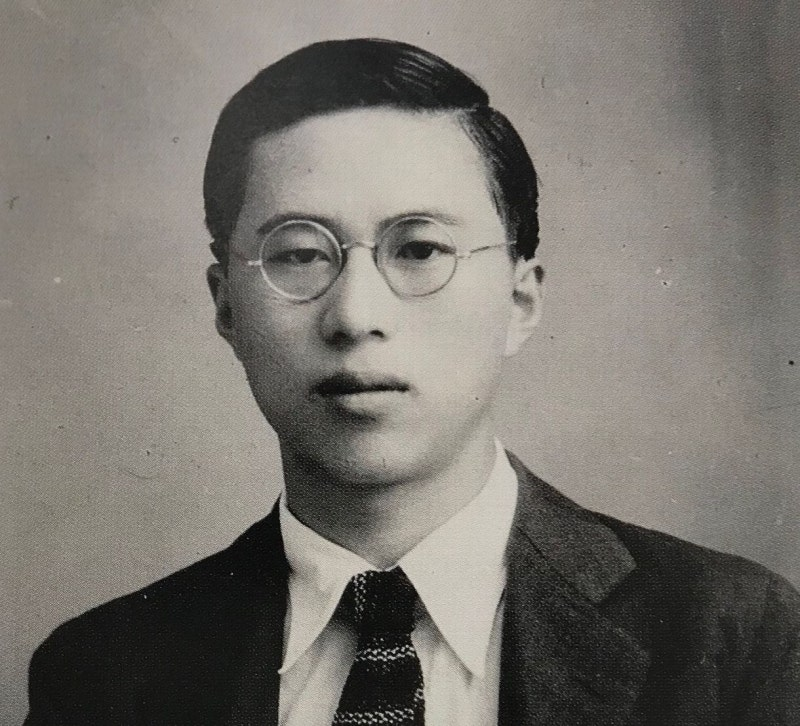
Son’s starting line was an unregistered shantytown that didn't appear on government maps.
His grandfather had crossed from Korea as an impoverished coal miner during colonial rule. His father brewed moonshine and raised pigs to survive. Swine waste stench hung over the house around the clock. Son's childhood mornings began by hauling a cart through neighboring towns, collecting food scraps for feed.
The contempt hurt worse than the poverty. Local Japanese kids chased him down dirt roads shouting ethnic slurs, hurling rocks at his head. Blood dripping down his forehead taught the boy how cold the world could be.
Yet in that squalid settlement, his father never taught him self-pity: "Masa, you are a genius. You are going to change the world." When his father collapsed vomiting blood, bankrupting the family, Son clenched his fists instead of breaking down. If he could not change his origins, he had to become so formidable that no one could look down on him.
At sixteen, carrying a copy of Ryotaro Shiba’s novel Ryoma Goes His Way, he dropped out of high school and crossed the Pacific alone, leaving behind the borders of family and nation.
2. Fifteen Minutes a Day on the Berkeley Lawn (Late 1970s)
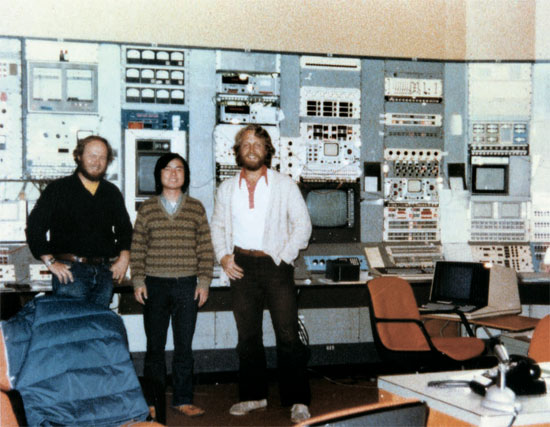
He enrolled at UC Berkeley, but poverty trailed him across the ocean.
The coursework was brutal. Pulling nineteen-hour study marathons while battling language barriers, he had zero time to flip burgers for minimum wage. Most students would have cut sleep or dropped classes. Son took an entirely different approach.
Sitting on the campus lawn, he set a strict rule for himself:
"Trading hours for wages will keep me trapped in poverty forever. I will spend exactly fifteen minutes a day on raw invention. I will build something new and make 100 million yen a year."
Every day, he picked three random words from a dictionary and forced combinations. Hundreds of duds later, he struck upon: Dictionary + Voice + Calculator. That spark became the blueprint for the world’s first multilingual electronic speech translator.
Lacking the funds to build a prototype, he walked up to prominent Berkeley professors and offered equity in exchange for building the hardware. Prototype in hand, he cold-called Tadashi Sasaki, an executive vice president at Sharp Corporation. After dozens of rejections, he secured a single fifteen-minute meeting. Pitching his vision with ferocious conviction, he walked away with a 100-million-yen contract.
At twenty, sitting on the grass in Berkeley, Son proved that high-leverage ideas compress time and break the chains of poverty.
3. The Runaway Staff and a Roar in a Dilapidated Warehouse (1981)
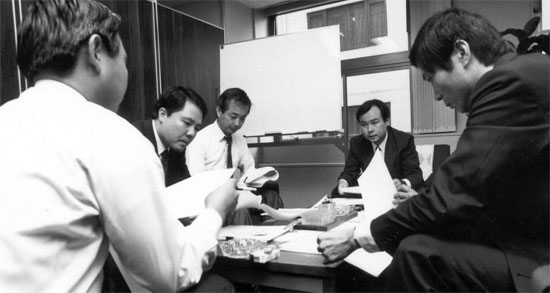
The 100 million yen Son earned in America was more wealth than his family had ever seen. He could have stayed in California and lived comfortably, but he liquidated everything and returned to Kyushu. He saw Asia as the defining battlefield of the future.
There, he founded Nihon SoftBank. Reality was harsh. Weeds pushed through the concrete floor of a leaky, decaying warehouse. When he climbed onto that apple crate and bellowed about trillions in revenue, his staff bolted, and local merchants dismissed him as a con artist.
Son was looking past the warehouse walls. At the time, Japanese business barely understood software, seeing computers merely as hardware. Son knew software would rule every human brain.
"Just as a bank holds money, SoftBank will become the central clearinghouse for software."
He cornered the president of Joshin Denki, Japan's largest consumer electronics retailer. Turned away at the door, Son camped out in the lobby for days until he got an audience:
"Every piece of software in Japan will eventually pass through my hands. Give me exclusive distribution."
Overwhelmed by Son’s sheer obsession, the president signed. Within a year of founding, SoftBank controlled 80% of Japan’s software distribution.
Refusing to shrink his vision in the face of ridicule, Son pulled corporate giants onto his playing field.
4. A Citadel of Four Thousand Books by a Hospital Bed (1983–1986)
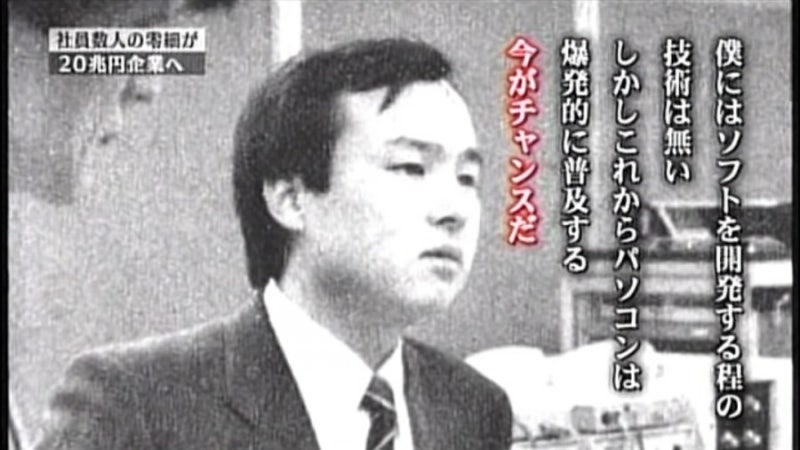
Two years in, business exploded. Millions in revenue materialized. His wife gave birth to their first daughter. Right when everything seemed aligned, fate blindsided him.
Collapsing from exhaustion, Son received a grim diagnosis at Tokyo's Keio University Hospital: chronic hepatitis B.
"You have three years. Five at most."
In the early 1980s, the disease had no known cure. At twenty-six, with his sails just catching the wind, Son was handed a death sentence. Gripping the edge of his hospital bed at night, thinking of his newborn daughter and weeping wife, he wept silently into the dark.
When the tears dried, something stubborn hardened inside him:
"My body is trapped in this ward, but my mind isn't. Even if I die in three years, the campaign inside my head does not stop."
He began stacking books around his bed like ramparts: philosophy, religion, military history, economics. Over three years, he devoured four thousand volumes. With IV lines in his arm, he cross-examined Sun Tzu’s Eastern strategy against Lanchester's mathematical laws of Western warfare. That crucible gave birth to the 25-character doctrine that would guide SoftBank forever: The Art of Sun-Son.
Three years later, an experimental treatment miraculously restored his liver function. The man who walked out of Keio Hospital was unrecognizable. To someone who had stared down his own mortality and survived, mundane business risks no longer registered as fear.
5. The Last Stand on $70 Billion of Ash (2000–2001)
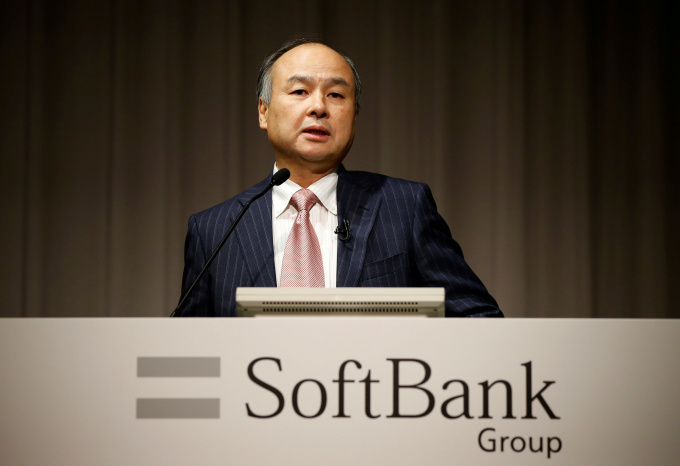
Back in the arena, Son caught the largest wave in modern history: the internet.
Drawing on his wartime reading, he backed Jerry Yang at Yahoo in the mid-1990s. By early 2000, dot-com mania pushed SoftBank shares to dizzying heights. Son’s net worth ballooned by a billion dollars a week, briefly surpassing Bill Gates as the richest man on Earth for a single day.
The euphoria lasted seconds. By autumn 2000, the bubble evaporated.
SoftBank stock went into freefall, plunging 99% from its peak. In six months, Son lost $70 billion of his personal fortune. Front pages branded him a fraud and predicted SoftBank’s imminent bankruptcy. Creditors tightened the noose, demanding immediate repayment.
Everyone expected him to file for bankruptcy and retreat. Instead, Son scraped together his remaining cash and charged into an even more reckless fight.
Betting the company's survival, he launched Yahoo! BB, a project to lay broadband across Japan. Donning red uniforms, his teams hit the streets handing out free modems to wage open war against telecom monopoly NTT. When regulators stalled his licenses, Son slammed his fists on a bureaucrat's desk and threatened to douse himself in kerosene and self-immolate right there.
Paper wealth could vanish, but his thirty-year conviction that the internet would reshape civilization never wavered. That bloody, all-in gamble pushed Japanese broadband into the fastest in the world—and revived SoftBank from the ash as an infrastructure empire.
Epilogue: Is Your Vision Bigger Than Failure?
The first half of Son’s life is not a highlight reel of effortless genius.
It is the survival chronicle of a kid who ducked stones in an unmapped slum, endured mockery atop an apple crate, swallowed his tears through four thousand books in a terminal ward, and took a $70 billion wipeout on the chin.
Every founder hits walls. Runways dry up, key hires walk out, and beloved projects collapse into dust.
A real vision proves its worth not when the wind is at your back, but when everything lies shattered around you. The conviction you refuse to compromise when flat on your back is the only key that unlocks the next era.
In Part 2 next Wednesday, we look at how Son leveraged twenty-minute instincts to back Jack Ma and bring the iPhone to Japan, survived a $30 billion humiliation at WeWork, and positioned himself at the center of the AI revolution.
※ Fact Check Note: The factual events in this dispatch—Son's early life in Tosu, Saga; studying in the U.S. at sixteen; inventing the speech translator at UC Berkeley and selling it to Sharp for 100 million yen; the 1981 SoftBank founding speech on an apple crate; his three-year battle with chronic hepatitis B; the 99% stock collapse during the 2000 dot-com bust; and the Yahoo! BB broadband offensive—are drawn from public autobiographies, verified interviews, and documented historical records.