
[Part 1] How a Rejected Audition Candidate Became Korea's Lead Comedy Writer — The Yoo Byung-jae Story

![[Part 1] How a Rejected Audition Candidate Became Korea's Lead Comedy Writer — The Yoo Byung-jae Story](https://storage.ghost.io/c/a6/38/a638bf3b-95fb-4fb0-ad74-33ac76788ad7/content/images/size/w2000/2026/05/15472106715733-1.png)
Intro — Why You Should Read This
The world keeps telling us to become the right answer. Be a good student. Fit in. Do not break the mood. But every so often, someone slips through those right answers and rewrites the shape of Korean comedy with a single crooked joke.
Across two parts, we follow ten years of one such person. The face of Korean black comedy: Yoo Byung-jae. Part 1 traces him from a poor village in the countryside to a tiny rented room in Seoul, to a failed comedy audition, and finally to the writing room of SNL Korea. Part 2 picks up after his contract with YG Entertainment, the era when he carved his own name into Korean comedy as a genre.
By the end of this piece, you will see that the most crooked joke is often the most precise observation.
1. The Starting Line — From Hongseong to Seoul, with Poverty in Tow
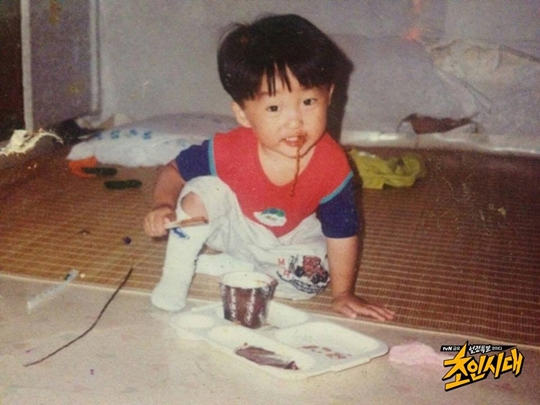
Yoo Byung-jae was born on May 6, 1988, in Hongseong-gun, South Chungcheong Province. He grew up in a poor rural household with several older sisters. According to his own recollection, the lingering preference for sons in rural Korea at that time meant he was raised slightly less poor than his sisters. In other words, even within poverty, there were poorer corners and slightly less poor corners. This early observation became the source of the double vision that runs through his comedy. Inside the same hardship, some get a bit more of the loss and some get a bit less, and he understood that as a child.
His grades were strong. As a top student in high school, he entered Sogang University in the Department of Mass Communication. There is a common misconception that he attended Dankook University Theatre and Film, but his actual transcript is Sogang Mass Communication. Entering an elite university looked like a class-mobility ticket, but the reality was different. He lived for over five years in a roughly three-pyeong (about ten square meters) rented room near Mapo, Seoul. To cover tuition, he took leaves of absence, scraped together money through part-time jobs, and re-enrolled when he had enough. After repeated leaves, he eventually faced near-expulsion.
The picture so far is familiar. A poor village boy from a top university, hanging on in Seoul. The usual move at this point is to turn toward stable employment. But his mind was turning in a different direction. What kept catching him, more than his coursework, were short jokes, satire, twisted sketches. He wanted to become a comedian. More precisely, he wanted to make laughter his profession.
If you have to compress this period into a single word, it is lack. He knew exactly what he was missing: money, time, a secure seat, confidence. That lack became the primary raw material of his comedy.
2. The Rejection — A First Door Slammed by the Public Audition

After finishing his military service and returning to school, he made up his mind in 2011 and applied for the open audition for comedians. The result was rejection. The most familiar entry door to Korean comedy was shut on him from the very first page.
This was not just a failed test. A young man who had been clinging to a Seoul rented room for over five years had finally reached for his real dream, and the answer was no. The usual reaction here is to fold. Go back to school. Find a safer track. Park the dream until later.
His move was different. He did not knock on the audition door again. Instead, he picked up his phone. He shot a short music video he wrote, performed, and starred in himself, and uploaded it to YouTube. There was no production budget. The equipment was a single phone.
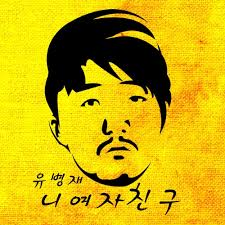
That video was Your Girlfriend Is Ugly. It was a short song wrapped around the awkward question of how to comfort a friend whose girlfriend is not conventionally attractive. It was not a politically safe joke. But it put into a song lyric the kind of line many people only ever say silently in their heads.
The video crossed 1.8 million views and became a moment on the Korean internet. Here is the key point. The system rejected him, but people outside the system recognized him. That was not a coincidence. He was a person who could function outside the system. Systems hire the right answer. The world outside the system can also find a seat for people who are not the right answer. He proved that with his own experience.
3. The First Call — When Yoo Se-yoon Said His Name
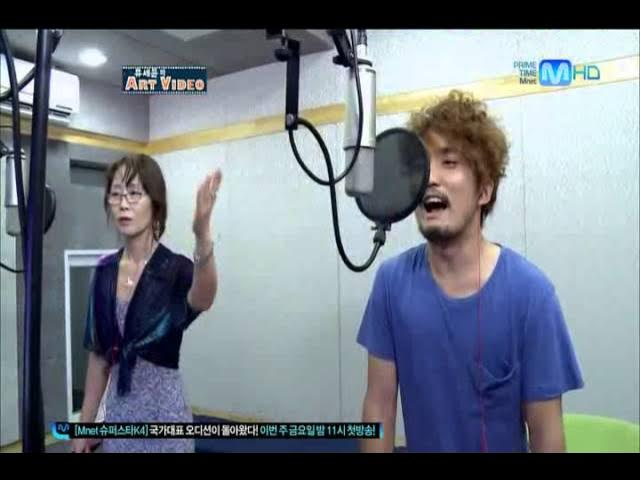
As Your Girlfriend Is Ugly caught fire, he was soon invited onto Yoo Se-yoon's Art Video. It was the first time the unknown young man stood in front of a camera with his own name attached.
Watching those clips today, you notice one thing. The composed, sly Yoo Byung-jae we now know is not yet there. What you see is a nervous young man, carefully releasing each line one word at a time. He was not a comedian on a stage so much as a person standing awkwardly somewhere near a stage.
But it was precisely that awkwardness that read as appeal to comedy industry insiders. People who could time their punchlines on the beat were already plentiful. A person whose timing and face slipped slightly off the beat felt fresh.
The person who saw him most accurately during this period was the SNL Korea production team. They brought him in not as a performer but as a writer. They called his name behind the camera before they called it in front of it. This is a critical pivot in his life.
Most comedy hopefuls take the stage first and write later. He wrote first, and took the stage later. That order made him, in the end, a comedian who lands jokes through structure rather than improvisation.
4. The Writers Room — Sharpening His Voice Behind the Camera

When he joined SNL Korea as a staff writer, he was around twenty-three. In Korean variety, it is rare for a twenty-three-year-old writer to be the color setter for a signature sketch. He contributed to most of the show's segments, but the one where his voice came through loudest was Extreme Job.
Extreme Job condensed corporate absurdity, the humiliation of being a young new hire, the pressure pushed down from above, into a single sketch. The way an office worker piles ridiculous tasks on a fresh intern, how everyday and normal that absurdity actually is, the way the audience could not help but project their own office onto the screen and laugh.
Two writerly traits stand out from this period.
First, he could compress an episode's joke into a single line. He was unusually good at distilling an entire sketch's message into one caption or one piece of dialogue.
Second, he never placed himself in the role of the joke's aggressor. His comedy is almost always the weak person scoring a hit on the strong, or the aggressor getting caught looking ridiculous in front of everyone. There are almost no jokes that look down on someone from above.
As his writing began to stand out, he was pulled in front of the camera. At first he was a tiny background figure cropped into the corner of the screen. Then he was a real character. The flow from writer to performer is rare in Korean variety. The default is the other way around. He became one of the most successful examples of that reversed flow.
5. The First Book — A Man Who Named His Own Genre Before Anyone Else Could
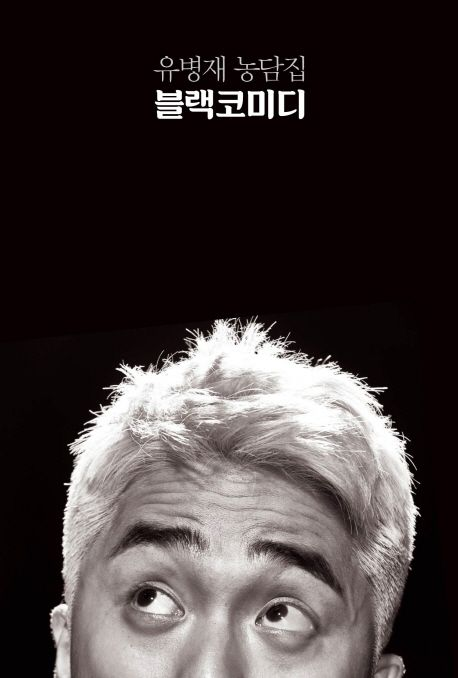
Moving back and forth between the writer's desk and the camera, he added one more thing to his table. Long-form writing. What he started compiling was not articles from magazines but the short pieces he had been saving in his notebooks like deposits. Essays, fables, idea sketches, unpublished fragments. After about three years of accumulation, he turned them into a single book.
That book was Black Comedy. The exact publication date belongs to Part 2, but the roots of the book lie in this earlier, unknown period.
One observation matters here. He picked the word that defined him before anyone else could. He told everyone first that he was not mainstream but B-side, second-tier, a jokester. The fastest way to fix your color in the Korean comedy market is to name your color yourself, and the word he chose was black comedy.
It is uncommon in Korea for a genre name to become a single performer's identity tag. Until then, comedians were usually known by character names (their on-screen personas) or by sketch names (their corner titles). Yoo Byung-jae announced himself with a genre name. That is a higher-order move in defining a comedian's identity.
If you compress Part 1 into a single line: a young man who failed the open audition became a writer with one phone, and that writer became someone who named his own genre out loud before anyone else could.
Epilogue — How Someone Who Is Not the Right Answer Finds Their Path
The core of Yoo Byung-jae Part 1 is simple. When the system says no, there is a way to prove yourself outside the system. And that proof does not require a grand production. It can start with a phone and a notebook.
He did not try to make himself the right answer. He admitted early that he was not the right answer, and he took the view from that seat and turned it directly into comedic material. His poorest hours, his most awkward expressions, his most twisted jokes. That was his first asset.
We all have at least one seat outside the system. A skill the company does not score, a sense the school does not grade, a line a coworker shrugs off as a passing joke. Yoo Byung-jae Part 1 says, pick up the phone from that seat first.
Micro-Mission — Find Your Single Line Outside the System
Pick just one today. A skill your company does not score, a sense your school never graded, an observation you usually throw away as a casual joke.
The system does not grade my ( ) ability. But to people outside the system, ( ) is the single line I can sell best.
Write it down. Throw that one line at at least one person today. The first joke Yoo Byung-jae brought into the world was also a short video among friends, made with nothing more than a phone.
In Part 2, we will follow him into the most glamorous record label in Korea, where he started his darkest jokes, and out the other side, where he became the mentor who raised Moon Sang-hoon.
Note: This newsletter is based on publicly reported sources and interviews, including: birth on May 6, 1988 in Hongseong; admission to Sogang University Department of Mass Communication (top of high school class, not Dankook Theatre and Film as commonly assumed); over five years in a Mapo rented room; near-expulsion from repeated leaves of absence; 2011 KBS open audition application and rejection; the YouTube clip Your Girlfriend Is Ugly crossing roughly 1.8 million views; appearance on Yoo Se-yoon's Art Video; recruitment as SNL Korea writer and the Extreme Job sketch.