
Samsung was founded on the principle of ‘Wooden Rooster’ management! — Lee Byung-chull (Hoam)
The Wooden Rooster (木鷄): A 100-Year Bet

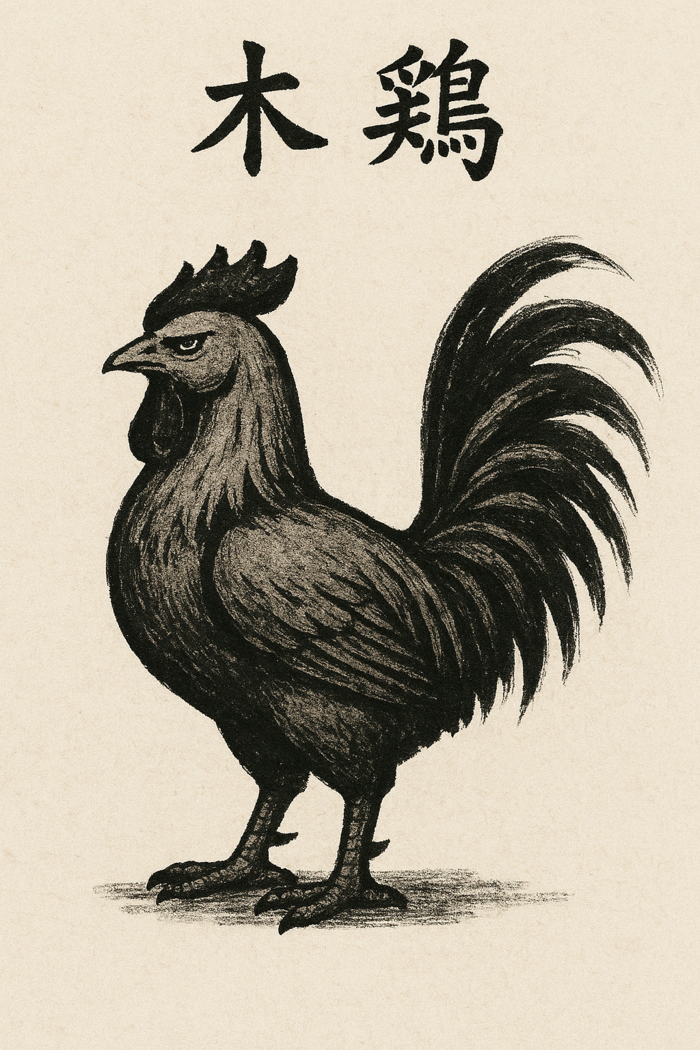
The Wooden Rooster (木鷄): A 100-Year Bet
“運鈍根 (Un-Dun-Geun): Wait for fortune, hold on with tenacity, and strike deep roots until the very end.”
In the twilight of his life, he chose the riskiest gamble instead of a comfortable retirement: semiconductors. At the time, everyone called him crazy. But Lee Byung-chull believed a businessman’s eye must pierce not just the immediate future, but 10, 20, or even 100 years ahead.
Unaffected by criticism and opposition, he maintained his rock-solid composure — the final, high-stakes move he made. Here is the ‘Legacy for the Future’ that entrepreneur Lee Byung-chull left for the next generation.
📍 Stop 1. Yongin Natural Farm (Everland): A Forest Planted on Barren Land
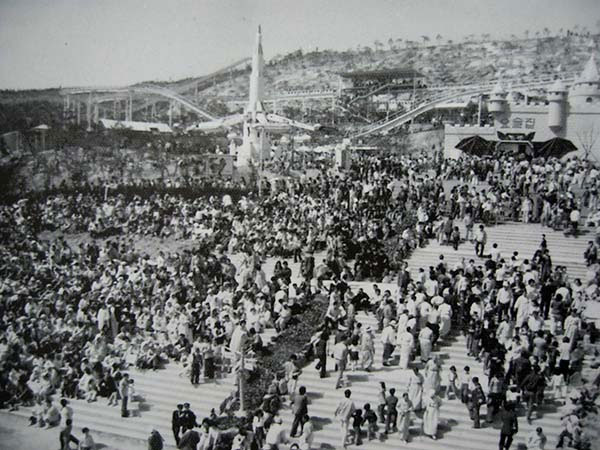
- Location: Cheoin-gu, Yongin-si, Gyeonggi-do
In the 1970s, he purchased rough, wild hills in Yongin, Gyeonggi-do. People whispered he was speculating. But he planted chestnut and apricot trees there. He believed that development in a land-scarce country like Korea was impossible without utilizing its mountains.
He reclaimed the barren land to build a pig farm and created a forest for families to enjoy, calling it the ‘Natural Farm’ (now Everland). It was more than just a theme park; it embodied his philosophy of offering the public a space for ‘rest’ and ‘nature’ in the bleak era of industrialization.
The Everland forest of today grew from the saplings he planted decades ago. By planting trees, he silently demonstrated that businesses, too, must be nurtured like trees — that deep, solid roots are more important than immediate fruit.
📍 Stop 2. Suwon Samsung Electronics Complex: The Dawn of the Electronics Industry
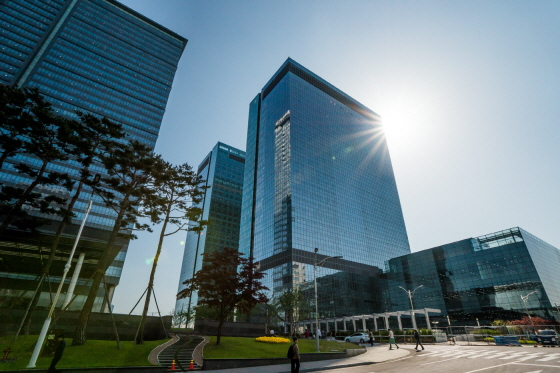
- Location: Yeongtong-gu, Suwon-si, Gyeonggi-do
In 1969, he established Samsung Electronics on the wide-open fields of Maetan-dong, Suwon. At the time, the domestic electronics market was dominated by GoldStar (LG), and the technology gap was huge. Even internal executives opposed the move, asking, “Why venture into the risky electronics business when our other operations are doing well?”
However, he pushed forward, stating, “For a country without resources, electronics is the only industry that can generate high added value.” He partnered with Japan’s Sanyo Electric to learn technology and started with black-and-white TV production. He demanded strict quality control, telling his engineers, “Defective products are a cancer.”
This location has become the heart of global Samsung today. It is a place where his pioneering vision shines — seeing a path that others weren’t taking, but one that was essential to follow.
📍 Stop 3. Giheung Semiconductor Factory: The Tokyo Declaration and a Life-or-Death Bet
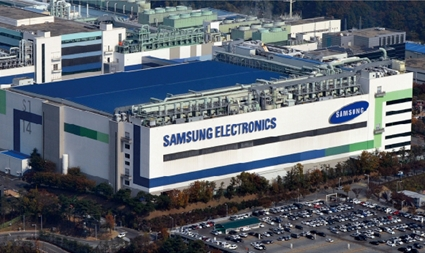
- Location: Giheung-gu, Yongin-si, Gyeonggi-do
On February 8, 1983, at the age of 73, Lee Byung-chull announced the so-called ‘Tokyo Declaration’ in Japan: “Samsung will make a massive investment in Very Large Scale Integration (VLSI).” The world called it a reckless gamble, but it was the result of meticulous calculation and a desperate sense of the times.
He had long pondered: “What is the path for a country with not a single drop of oil to become a developed nation?” In 1982, he personally visited Silicon Valley, touring IBM, HP, and GE factories, and gained insight from Japanese economic scholars that “light, thin, short, and small things (輕薄短小, Gyeong-Bak-Dan-So) will dominate the world.” He became convinced that ‘semiconductors’ were the only ‘industrial opportunity’ for the Korean economy to escape the eternal role of a subcontractor and achieve technological self-reliance.
Japan’s Mitsubishi Research Institute published a report mocking Samsung with “5 Reasons Why Samsung is Bound to Fail in Semiconductors.” Internal executives even tried to dissuade him relentlessly. But he stood firm.
“At 73, though it is the late stage of my life, the time has come to pour all my efforts into this difficult task for the next hundred years of this nation.” — Hoam Lee Byung-chull
He visited the Giheung construction site every week to encourage the team. The successful development of the 64K DRAM was the moment Hoam’s long-cherished desire was fulfilled. This marked the opportunity for South Korea to break free from the humiliation of being a ‘technology colony’ and move toward global excellence.
📍 Stop 4. Ho-Am Art Museum: Cultural Contribution to the Nation (文化報國)
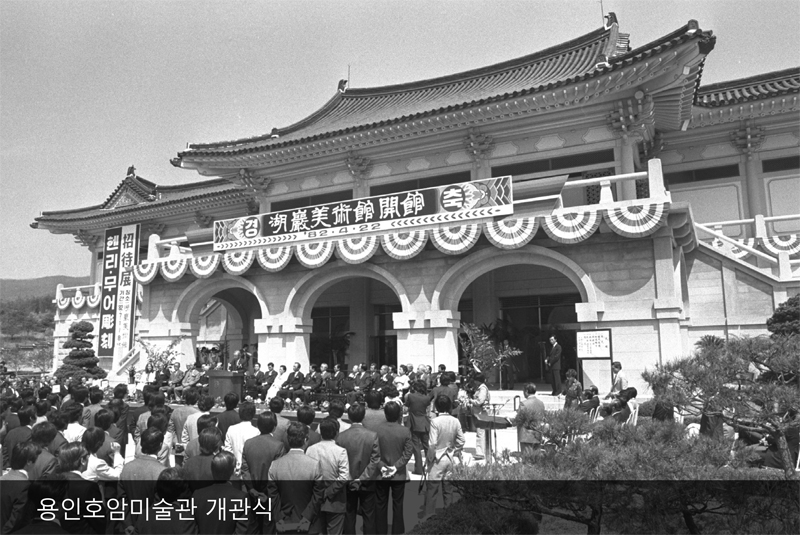
- Location: Cheoin-gu, Yongin-si, Gyeonggi-do
He established the Ho-Am Art Museum, gathering national treasure-level cultural artifacts he had collected throughout his life — Goryeo celadon, Joseon white porcelain, paintings by Kim Hong-do. He personally funded the effort to protect artifacts that might have been taken overseas.
“A people without culture has no future.” He believed that spiritual richness was as crucial as economic prosperity. Strolling through the museum’s garden, Huiwon (熙園), he aimed to leave the beauty of Korean tradition to future generations.
His belief that a businessman should not merely earn money but also protect and cultivate culture is enshrined here. It was a place where he temporarily stepped away from the fierce business world to contemplate what values would last forever.
📍 Stop 5. Seungjiwon: The Silence of the Wooden Rooster (木鷄)
- Location: Itaewon-dong, Yongsan-gu, Seoul
Seungjiwon, the office and guesthouse where Chairman Lee Byung-chull spent his later years. He often gazed at the ‘Wooden Rooster (木鷄)’ painting on the wall. The Wooden Rooster symbolizes a fighting cock that maintains perfect composure, unmoved by any situation, like a rooster made of wood.
Amid the astronomical losses of the semiconductor business and the public’s criticism or praise, he strived to remain calm and unemotional, like the Wooden Rooster. It was here that he organized his life and provided management lessons to his successor.
He always wrote the calligraphy “경청 (傾聽, Deep Listening),” teaching that listening carefully to others was the core of management. Until his final moments, he pondered the direction his company, and the nation, should take. He quietly passed away here, reflecting on the truth of “Empty-handed I came, empty-handed I go (空手來空手去).”
Epilogue: Came Empty-Handed, Left Empty-Handed
Lee Byung-chull’s final journey was about ‘emptying’ and ‘sharing,’ not ‘filling.’ He left behind the future opportunity of semiconductors and the cultural heritage of forests and an art museum. And he passed on the wisdom of ‘composure like a Wooden Rooster’ and ‘Deep Listening.’
His true legacy is not simply money or buildings. It is the desperate realization that “technology is the only way for a resource-poor nation to survive” and the immortal entrepreneurial spirit that vowed, “I will achieve technological self-reliance in my generation.”
What are you striving to leave behind? What do you hope will remain where you stand 100 years from now? Lee Byung-chull’s journey asks us: “What are you planting today for the future?”
May this three-day pilgrimage following his footsteps serve as a compass for your own path.
Author Linkedin
Source: Hoam’s Autobiography