
I am a Failure, Too: Lee Byung-Chul (Samsung) in His 20s
The Punishment of ‘Doing Nothing’ and the Road to the Top: The Lee Byung-Chul Story

The Punishment of ‘Doing Nothing’ and the Road to the Top: The Lee Byung-Chul Story
“The hardest pain to endure wasn’t poverty; it was the shame of having ‘nothing to do.’”
People envied him, saying he was born with a silver spoon. They were right; he was well-off. But that comfort was his poison. Until the age of 26, he was merely a ‘surplus man,’ gnawing away at time without any purpose.
If it hadn’t been for the profound humiliation he felt that night, seeing his children’s faces asleep under the moonlight, the Samsung of today might not exist. Today, we step into his most shameful era, hidden behind a spectacular success, and the desperate ‘Field of Change’ where he struggled to pull himself out of that swamp.
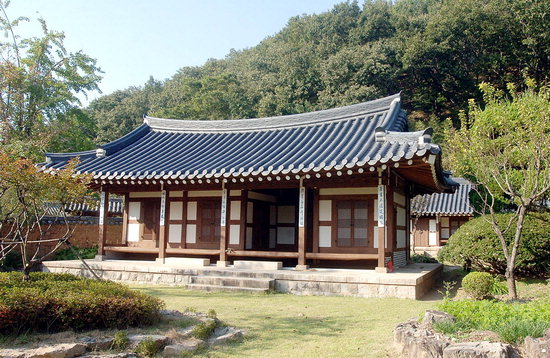
📍 Spot 1. Birthplace in Junggyo-ri, Uiryeong, Gyeongnam: The Prison of Comfort
Address: Hoam-gil, Jeonggok-myeon, Uiryeong-gun, Gyeongsangnam-do, Korea
Lee Byung-Chul was born in 1910 into a prosperous scholarly family in Uiryeong. As the youngest son of a wealthy household — a family who owned enough land to yield a thousand seok (a large unit of grain) — he knew no lack. He studied classical Chinese literature under his grandfather from the age of five and attended the mun-san-jeong private school, but he was far from a model student.
As a boy, he enjoyed being the neighborhood leader and was full of mischief rather than focused on studies. Paradoxically, his privileged background failed to instill a clear sense of purpose. Here, he gained the mental foundation of Confucian values, but he also had to battle the laziness that comes with ‘comfort.’ This affluent childhood, where everything was given and nothing was earnestly desired, was the origin of ‘complacency’ (musaanil) — a state he would later fiercely guard against.
📍 Spot 2. Waseda University, Tokyo, Japan: Witnessing the Gap
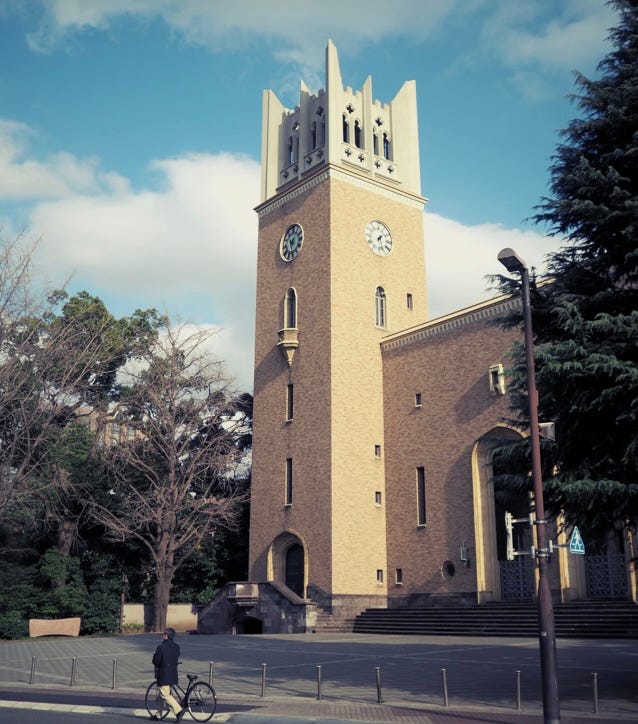
Address: Shinjuku-ku, Tokyo, Japan
Driven by curiosity for new civilization, he went to Japan. He enrolled in the Faculty of Commerce (later Politics and Economics) at Waseda University and was profoundly shocked by the development in Tokyo. A huge gap existed between industrialized Japan, with its factories running and trains moving, and the stagnant reality of his homeland.
Yet, he remained an observer. He spent his time visiting factories and reading rather than focusing on schoolwork, and his generous allowance allowed him to enjoy the city’s nightlife. He was forced to drop out in the fall of his second year due to beriberi, making it his fourth time quitting an educational institution. All he took away was a vague feeling that ‘the world is changing.’ The advanced culture he witnessed then became the seed for his later commitment to ‘Business for the Nation’ (Sa-eop Boguk), but it had yet to sprout.
📍 Spot 3. Sarangbang (Guest Room) in Uiryeong Residence: The Moonlight Tears
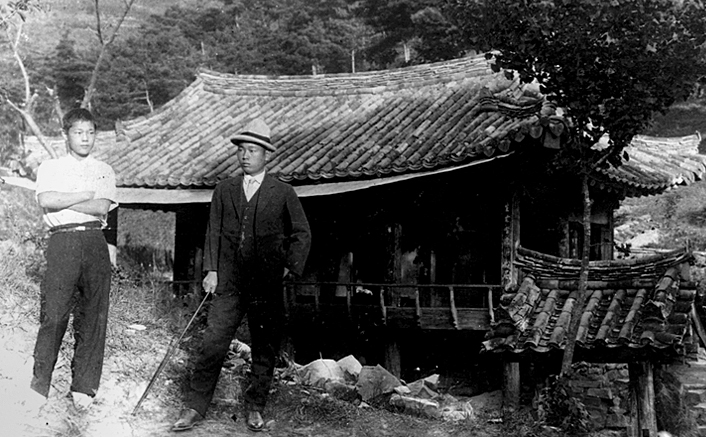
Address: Hoam-gil, Jeonggok-myeon, Uiryeong-gun, Gyeongsangnam-do, Korea
After returning home, Lee Byung-Chul’s life was one of sheer lethargy. At 26, he was unemployed and idling. Despite being married with three children, he often stayed up all night playing golpae (a form of gambling) with friends. One late night, after finishing a gambling session, he sat down on the porch of his house.
The moonlight shone through the changhoji (traditional paper door) and illuminated the faces of his three sleeping children. Their peaceful appearance contrasted sharply with his own, having just wasted time at the gambling table. In that moment, he felt a lightning bolt of realization — a terrible shame.
“What am I doing right now? I am wasting my life — no, my children’s future — with this idleness.”
That night of bitter self-reproach became the most critical turning point in Lee Byung-Chul’s life. The next day, he burned all his gambling tools and asked his father for business capital. It was the moment he realized that ‘Doing Nothing’ (Muwih) was the greatest sin.
“No period in a person’s life is wasted. Let’s say an unemployed person spent 10 years fishing. Whether those 10 years were a waste depends on what that person does 10 years later. He must have learned something while fishing. How one accepts and endures life as an unemployed person can greatly change one’s inner self.”
— Hoam Autobiography, p. 46
📍 Spot 4. Masan Hyupdong Rice Mill: The Bitter Taste of First Bankruptcy
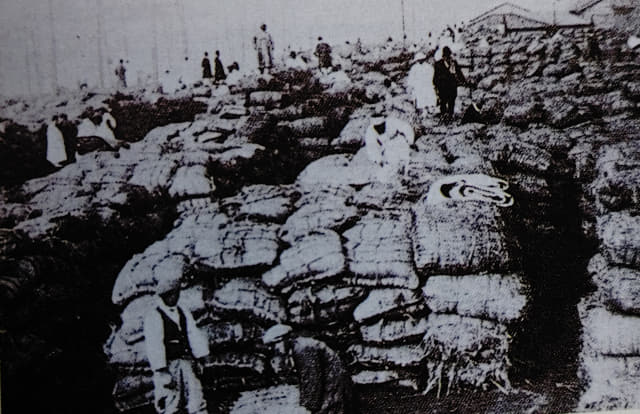
Address: Masan-si, Gyeongsangnam-do (now Masanhappo-gu, Changwon-si)
In 1936, he started a rice milling business in Masan with friends. The capital was ample, and the business seemed to flourish initially. However, he was unaware of the market’s ruthlessness.
He failed to anticipate the volatility of rice prices and the controlled economy during the late Japanese colonial period and the start of the Sino-Japanese War. He stockpiled rice, expecting prices to rise, but they plummeted. Unable to pay the loan interest, the rice mill closed down. His first venture ended in miserable failure.
But instead of giving up, he reopened the ledgers. “Why did I fail?” He thoroughly reviewed his failure. The causes were vague optimism, lack of market research, and a speculative approach. This failure taught him a lifelong lesson: ‘Business is not luck; it’s thorough calculation and risk management.’
📍 Spot 5. Masan Land Market: Recovery and the Lesson
Address: Masan-si area, Gyeongsangnam-do
After the rice mill failure, he turned his attention to the land business, using his remaining capital and bank loans. Masan was undergoing reclamation work at the time, and he purchased land based on development information. This time, it was different. Through meticulous research and timing, he made a large profit, securing enough funds to more than cover the money he lost in the rice mill.
However, as the Sino-Japanese War escalated, bank loans were frozen, and he faced another crisis. After selling off the land at a low price to settle debts, the amount of cash he had left was similar to when he first started.
Through this process, he gained an eye for reading the ‘Current of the Times’ (Siryu). He realized that even the best ideas cannot go against the flow of history. The principle of ‘Safety First,’ which dictated that he should secure cash flow at all times and not be complacent with a single success, was formed during this period.
Epilogue: Failure is Just a Process, as Long as You Don’t Stop
Lee Byung-Chul’s twenties were a string of failures: dropping out of college, gambling, the rice mill’s bankruptcy, and land speculation setbacks. But he didn’t stop. Because he never forgot the humiliation he felt under the moonlight, he accepted failure not as ‘the end,’ but as ‘tuition.’
“A person encounters several turning points in a lifetime. Sometimes they create them themselves, but sometimes they find them unexpectedly. That unexpected turning point came to me one day.”
— Hoam Autobiography, p. 42
Does the wandering and failure you’re experiencing now seem meaningless? It is not. If Lee Byung-Chul hadn’t experienced the emptiness of the gambling den and the bankruptcy of the rice mill, the giant tree that is Samsung would not have taken root. The important thing is not to avoid mistakes, but to learn from them.
Next, we will explore how he used these lessons to leap from a ‘Merchant’ to a ‘Manufacturing Titan.’
Author Linkedin