
How a Textile Korea Company Captured 60% of the Global AI Memory Market
We often say we live in an era of ‘volatility’. Global raw material prices fluctuate, and the fate of a business can be decided by a single…

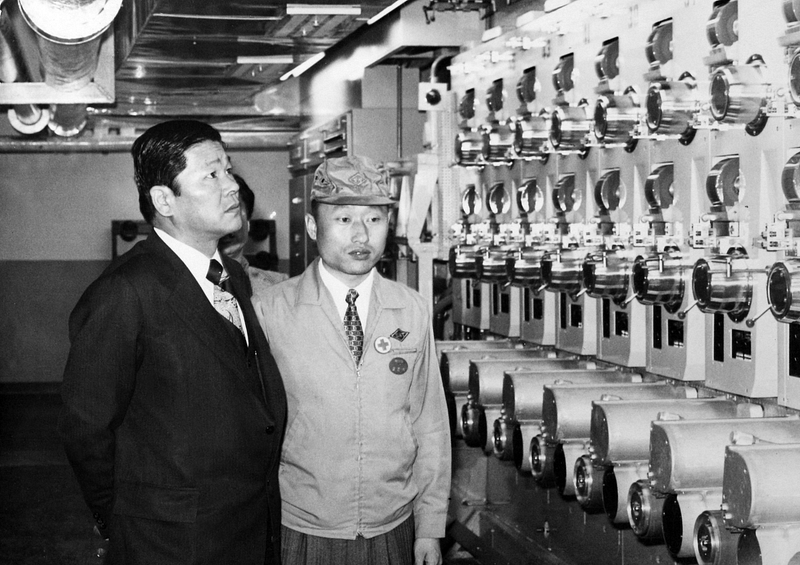
We often say we live in an era of ‘volatility’. Global raw material prices fluctuate, and the fate of a business can be decided by a single AI model. But 50 years ago, in South Korea, there was a giant trapped in a far more desperate ‘bottleneck of survival’. This is the first story of how he broke through that suffocating helplessness and adopted the ‘lens of a ruler’.
📍 1. Standstill: Silent Machines and the Terror of Helplessness
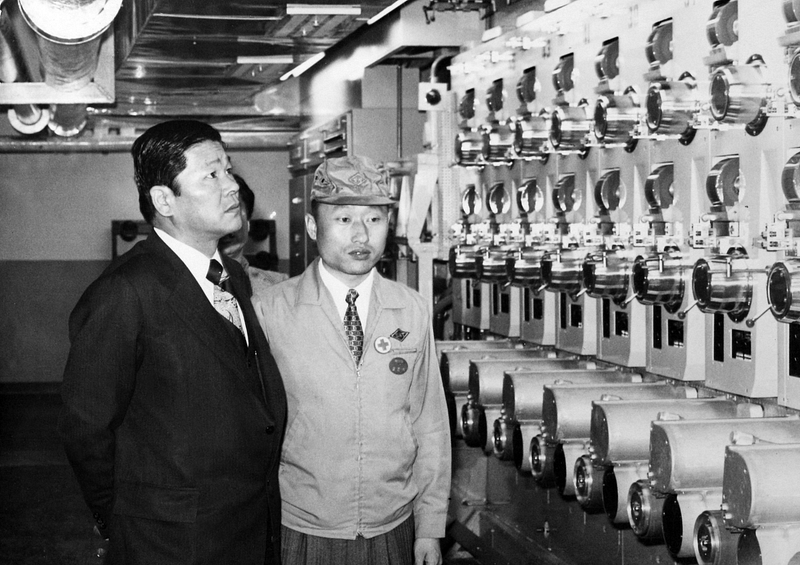
In the fall of 1973, the factory of Sunkyong Textile (now SK Networks) was unnervingly quiet.
The machines were fine. The technicians were in their places. But the looms were not moving.
Because there was no raw material.
The First Oil Shock hit the world.
No oil meant no synthetic fiber yarn, and no yarn meant no fabric could be woven.
At that time, Sunkyong was at the far end of the ‘Downstream’.
The lifeline of their business — raw materials — was left in the hands of major foreign oil companies.
In that silence of helplessness, Chey Jong-hyun realized:
“We are not doing business; we are begging, relying on the mercy of others.”
📍 2. Perception: Discovering the Vital Point of Business
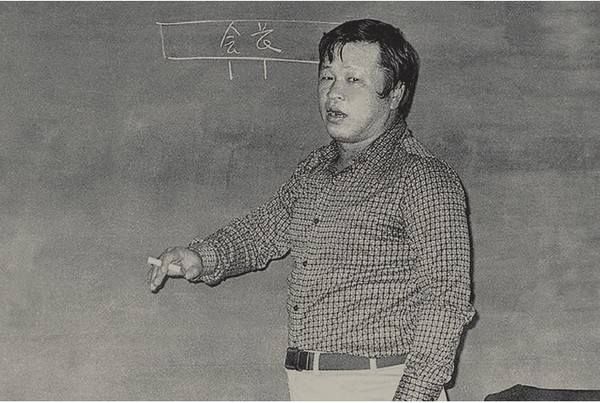
Chey posed a question:
“Why can’t we make clothes just because there is no oil?”
The answer was simple: lack of vertical integration.
He perceived that the essence of this pain was not an ‘external variable’ but an ‘internal deficiency’.
While others worried about oil prices, he began to ponder the ‘structure to dominate oil’.
This was the beginning of the famous declaration: ”From Oil to Textile.”
It was a determination bordering on madness at the time — a textile company aiming to pump and refine crude oil.
📍 3. Endurance: How to Survive a Decade of Darkness
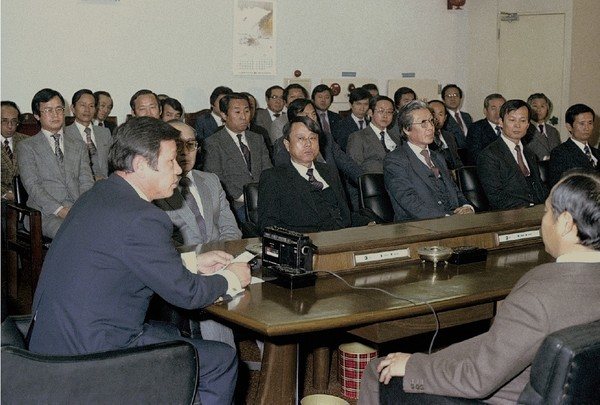
The giant’s lens did not look at a single year.
He looked ten years ahead and made his move.
From the decision in 1973, it took more than seven years for SK to acquire the Korea Oil Corporation (Kopeco).
During those years, he faced ridicule.
“Just stick to making textiles; why the oil business?” the cynics jeered.
But he did not waver.
Because he knew that if he didn’t grasp the vital point (bottleneck) of his business, he would eventually come to a standstill again at any time.
📍 4. Transformation: From Victim to Master
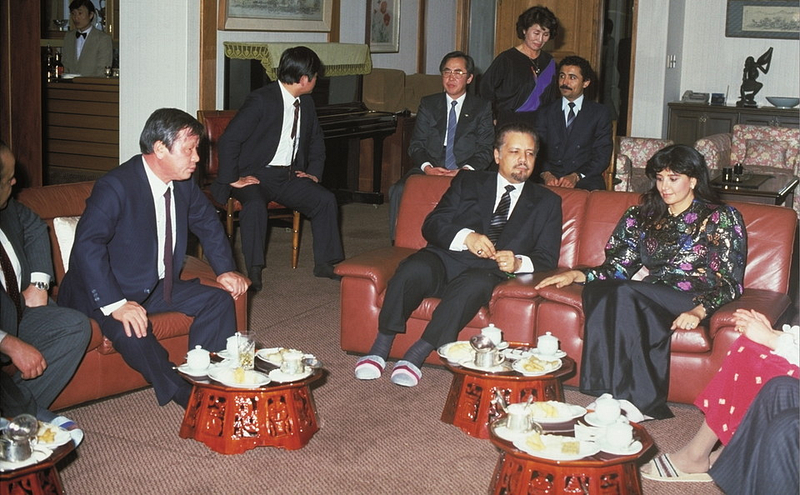
In 1980, the opportunity finally came.
In the acquisition race for Korea Oil, SK emerged as the victor, defying everyone’s expectations.
It wasn’t just because they spent the most money.
It was the ‘network of trust’ built with Saudi Arabia over the past seven years and meticulous preparation that shone through.
This wasn’t just about buying an oil company.
It was a historic moment when SK’s identity was completely transformed from a ‘processor’ to an ‘energy sovereign’.
By dominating the upstage of the business, they became a ship whose sails would no longer be broken by external storms.
📍 5. Projection: Where is your ‘Upstream’?
Today, ‘Oil Shocks’ come to us under different names.
For an office worker, it’s a sudden department merger; for a freelancer, it’s the loss of a major client; for another, it’s their outdated skills exposed before the massive wave of AI.
What is that ‘external variable’ that makes you tremble?
Could it be that you, too, are sprinting while relying only on a single lifeline called a ‘salary’, or mistaking others’ lenses — like the company’s reputation — for your own?
Look again through Chey’s lens.
A real crisis is not employment instability hitting you, but the **structural deficiency of your own weapons** that leaves you with no choice but to be swayed by those changes.
Epilogue: What will you grasp today for 10 years later?
Chey Jong-hyun’s vertical integration was not just an expansion of business.
It was a ‘war of liberation’ that reclaimed sovereignty over one’s life from the position of a helpless victim.
Examine your career structure right now.
For unwavering freedom ten years from now, what is ‘your own oil’ you must secure today, even while taking risks?
Micro-Mission “Diagnosing My Lifeline (Constraint)”
Today, identify one most powerful external factor that could stall your business.
(e.g., dependency on a specific platform’s ads, a few key clients, dependency on individual labor, etc.)
Then, write down in just one sentence what you would start doing if you were to build ‘your own refinery’ to prepare for when that factor disappears.
“We must achieve vertical integration from oil to textile. That is the only way for us to survive.” — Chey Jong-hyun