[Feature] Where is the Silicon Valley of the World’s Second Largest Tech Power, China?
If Silicon Valley is the undisputed heart of the American IT industry, the name for the core of the world’s second-largest technology power…
![[Feature] Where is the Silicon Valley of the World’s Second Largest Tech Power, China?](https://storage.ghost.io/c/a6/38/a638bf3b-95fb-4fb0-ad74-33ac76788ad7/content/images/size/w2000/2026/05/0-e-ymoip74z2wfpsj.png)
If Silicon Valley is the undisputed heart of the American IT industry, the name for the core of the world’s second-largest technology power is clear: Haidian District, Beijing.
We often dismiss China’s growth as mere ‘copycats’ or ‘economy of scale.’ However, it’s time to reassess that view. China is now a direct threat to the U.S., wielding innovative technological superiority in software, AI, and global platforms. What has fueled this ultra-rapid growth in just a few years?
This journey will focus on Haidian, the IT epicenter in northwestern Beijing, to explore the very sites where China’s massive tech empire was born and how it evolved. From the intense survival drive of elites starting at Tsinghua and Peking Universities to the state-designed ultra-fast capital injection system of Zhongguancun Entrepreneurship Street, and the market penetration speed driven by the ‘996’ culture seen at Lenovo, Baidu, and ByteDance.
This piece explores the locations redefining global technology standards and delves into the forces driving their growth.
1. Tsinghua & Peking Universities: Elite-Driven Accelerated Growth
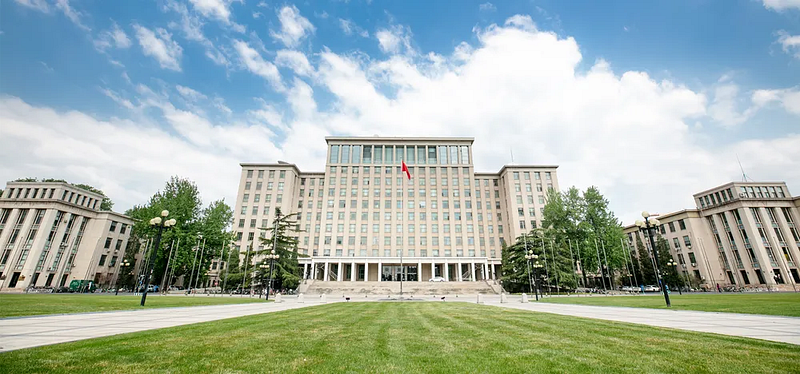
- Locations: Tsinghua University (30 Shuangqing Rd, Haidian District, Beijing), Peking University (5 Yiheyuan Rd, Haidian District, Beijing)
While free-flowing debate happens under the warm California sun at Stanford, the two elite campuses in Beijing are focused on ‘goal-oriented achievement.’ Tsinghua and Peking University are less mere educational institutions and more the apex of a national selection system, pooling the best of China’s millions of tech elites.
Graduates here possess a far more desperate survival drive than their American counterparts, where personal success directly translates to the success of their family and social class. Countless entrepreneurs, like Meituan’s Wang Xing, form their initial teams and solid Guanxi (network) around these campuses. Their ventures start not just with ‘innovative ideas,’ but with a ‘team composed of the best brains.’
2. Zhongguancun Entrepreneurship Street: A State-Engineered Startup Hub
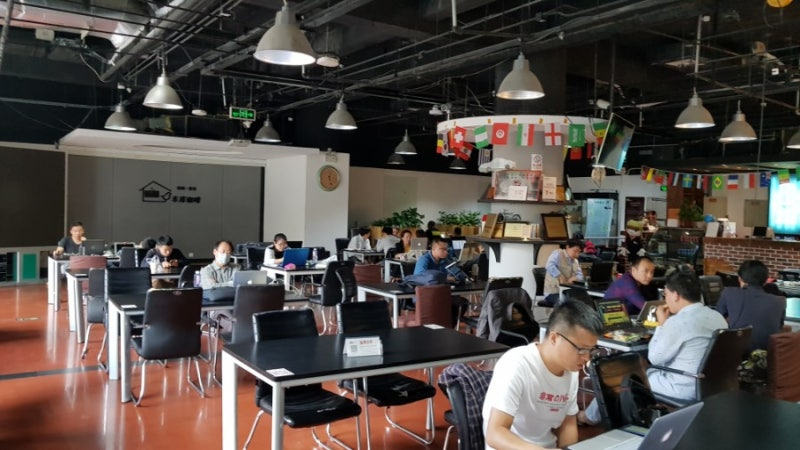
- Location: Zhongguancun Entrepreneurship Street, Haidian District, Beijing (Known for Cheku Cafe)
Stepping into the heart of Haidian, you find Zhongguancun Entrepreneurship Street. This street did not form organically over decades like America’s Sand Hill Road; it was a space created by a strategic, state-led initiative in the mid-2010s.
The street is dense with spots like Cheku Cafe (车库咖啡, Garage Cafe) and 3W Coffee. These were not ordinary cafes. They were public audition venues where countless young founders paid the price of a cup of coffee to pitch their ideas to investors. Founders presented day and night, and investors reportedly poured in initial capital, driven by an extreme anxiety to ‘capture the opportunity before it vanishes.’
This ‘coffee chat culture’ created an intense speed competition to rapidly validate ideas and secure capital. Concurrently, the government provided low-interest loans, tax breaks, and, most importantly, social legitimacy. Thanks to the ‘shield’ of government capital and policy support, China’s early tech companies could minimize the initial risks faced by their U.S. or European counterparts and focus solely on growth.
3. Lenovo Headquarters: The Reverse Gear for Survival
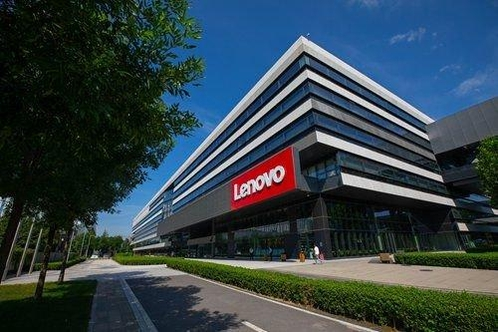
- Location: Building 2D, Lenovo Campus, №10 Xibeiwang East Road, Haidian District, Beijing
Founded by Liu Chuanzhi in 1984 with funding from the Chinese Academy of Sciences (CAS), Lenovo is a PC manufacturing and IT service company that once topped the global PC market and has since expanded into data center and mobile device businesses.
Lenovo symbolizes the first generation of Chinese IT enterprises. When Liu Chuanzhi started, China was a technological wasteland. Instead of competing directly with U.S. giants like Microsoft or IBM, Lenovo chose the cold logic of ‘strategic absorption of external technology.’ Their bold move in 2005 to acquire IBM’s PC division was the blueprint for Chinese companies to buy Western technology and brands to leapfrog into global players. They prioritized ‘market survival’ over technology itself, a significant lesson for the subsequent generation of Chinese firms.
4. Baidu Campus: The Empire Built on Data Moats
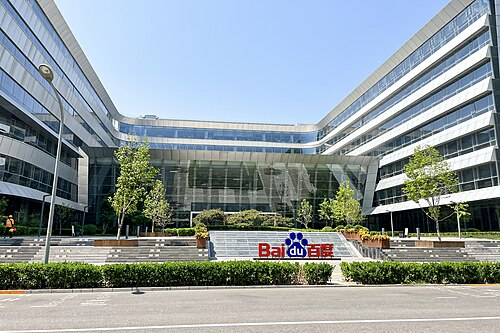
- Location: Baidu Science Park, №10 Shangdi 10th St, Haidian District, Beijing
Founded by Robin Li in 2000, Baidu is China’s largest search engine company, now heavily investing in AI, particularly autonomous driving (Apollo) and LLM (ERNIE Bot).
Baidu’s massive campus in the Shangdi area of Haidian symbolizes an empire born atop an information barrier. With Google’s exit from the Chinese market, Baidu overwhelmingly monopolized the Chinese search market, accumulating an immense war chest of ‘data and cash.’ Li has leveraged this capital since the late 2010s to fully invest in AI, leading China’s AI technology as a national strategy. While the monopolistic environment provided stability for growth, it also posed the risk of ‘complacency,’ resulting in a delayed transition to the mobile era.
5. Xiaomi Campus: The Culture of Speed and the ‘996’ Shadow
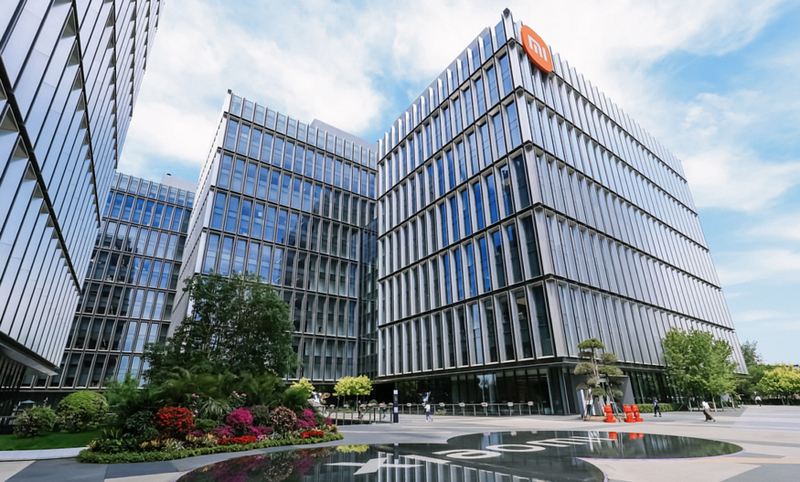
- Location: Xiaomi Science and Technology Park, Xishan Jinghua Rd, Haidian District, Beijing
Xiaomi, founded by Lei Jun in 2010, is a smartphone and IoT ecosystem company. It pursued a minimalist design similar to Apple’s while conquering the market with extreme cost-effectiveness (value for money).
Touring Xiaomi’s new headquarters, one can feel their ‘operational ruthlessness.’ While Apple focused on design and user experience, Xiaomi focused on ‘extreme supply chain management’ and a ‘fast product feedback loop.’ Lei Jun’s philosophy: ‘Minimize margins and win by volume.’
Behind this success lies the ‘996 culture (9 a.m. to 9 p.m., 6 days a week),’ a shadow dominating the Chinese IT industry. This culture enabled Chinese tech companies to gain a ‘speed advantage’ in product development and market penetration by deploying significantly more labor hours than their U.S. counterparts. Xiaomi’s success is a synthesis of this compressed workforce and efficiency.
6. ByteDance Offices & Wangjing SOHO: Algorithm and Global Ambition
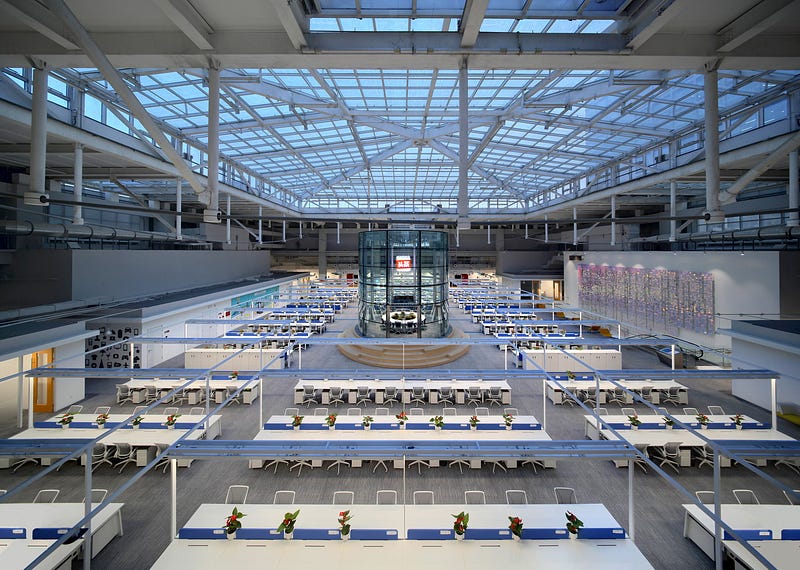
- Location: Zhonghang Plaza (中航广场), 43 North 3rd Ring Road West, Haidian District, Beijing
ByteDance, founded by Zhang Yiming in 2012, is an algorithm-driven content platform company operating TikTok and China’s Douyin.
The Wangjing area, adjacent to Haidian, is a more recently emerged IT hub. ByteDance, with its decentralized offices, represents the new generation of Chinese companies. They directly challenged and won against Meta’s Instagram and Facebook in the global social media market with TikTok.
Zhang Yiming introduced a new logic: ‘recommendation algorithms’ instead of ‘search.’ Their success is the result of applying their data analysis skills, honed in the fierce competition of the Chinese domestic market, and a rapid A/B testing culture directly to the global stage. TikTok proved that a Chinese company can move beyond the ‘imitator’ stage to set a global standard with innovative technological superiority.
7. DeepSeek AI Research Institute: The AI Catch-Up Front Line

- Location: Hangzhou, China (Address unconfirmed)
Finally, about a 5-hour train ride from Beijing is the DeepSeek AI Research Institute in Hangzhou. DeepSeek symbolizes how China’s IT competition has shifted from hardware and apps to the core of Artificial Intelligence (AI). Companies like DeepSeek are fiercely pursuing U.S. leaders like OpenAI and Google DeepMind in the LLM sector, backed by national-level talent and capital support.
The rise of these firms shows that while China faces challenges in core infrastructure like ‘AI chips’ due to U.S. sanctions, they are rapidly closing the gap in ‘algorithms and applied technology,’ leveraging top-tier talent and vast amounts of data. They prove the enduring power of China’s intellectual capital.
Epilogue: Beijing’s Success Formula
In Beijing’s Haidian District and Hangzhou, we’ve identified the core forces driving the past, present, and future of China’s IT industry. Their growth isn’t simply due to a massive population and a domestically protected market.
Their success equation can be summarized by four key components:
- Elite Capital: The ‘goal-oriented’ Guanxi network established by top-tier graduates from universities like Tsinghua and Peking, coupled with a desperate, irreversible survival drive upon failure, formed the foundation for entrepreneurship.
- State-Driven System: As seen in Zhongguancun Entrepreneurship Street, the government provided a policy shield and capital support, removing initial risks and creating an environment where companies could focus solely on growth.
- Speed and Labor: The ‘996’ culture, symbolized by companies like Xiaomi, offered a time advantage, enabling them to develop products and dominate markets faster than Western firms through extreme, labor-intensive speed.
- Algorithmic Innovation: As proven by ByteDance’s TikTok, China has moved beyond mere imitation to the stage of an innovator, setting a new technical standard — the recommendation algorithm — in the global market.
In conclusion, Beijing has built its status as the world’s second-largest IT power, not on Silicon Valley’s ‘free-flowing ideas,’ but on a foundation of ‘rigorously engineered competition and survival.’ Especially with examples like DeepSeek AI, China is aggressively closing the gap with the U.S. on the new technological front line of AI, leveraging its resources in talent and data.
P.S. To Those on the Race Track
In this state-fostered environment, companies are running a breathless race, overcoming extreme, survival-critical situations. This competition, which prioritizes speed and efficiency, has proven to be a successful equation for Rapid Growth and Market Share expansion.
However, amidst this dazzling pace of growth, it is crucial not to overlook the most important element for the future: maintaining a sustainable ‘Sustainability’ and focusing on the ‘quality’ of development.
Achieving victory on the competitive front line while simultaneously pursuing a balanced vision for responsible prosperity, I believe, will ultimately define a company’s true caliber.
Author Likedin