
5 Business Lessons from Ford (aka. Bottlenecks)
The conveyor belt was an internal product tailored to the human scale.

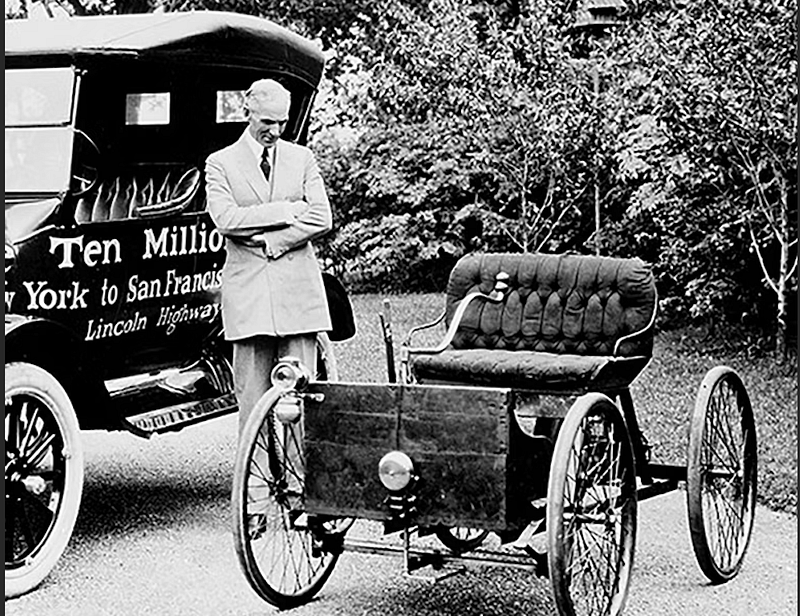
The conveyor belt was an internal product tailored to the human scale.
Ford went beyond simply manufacturing cars; he reinvented the very ‘way’ things are made. Highland Park is the birthplace of modern mass production. Here, he revolutionized the assembly method — which used to be a major bottleneck — and elevated laborers to the status of consumers. Let’s examine the mechanism of how efficiency can become a blessing for humanity.
1. Piquette Avenue Plant
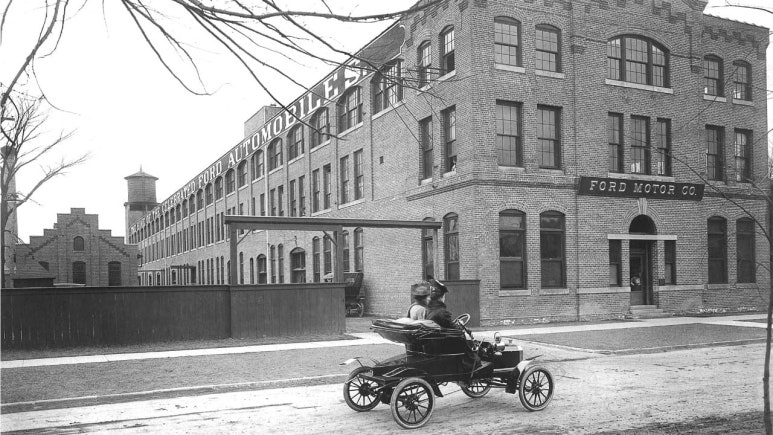
Address: 461 Piquette Ave, Detroit, MI 48202
This old three-story building is where the ‘Model T’ was born. In the early days, workers would carry parts back and forth to a stationary spot to assemble the car, and I simply could not tolerate that chaotic waste. One morning, I dropped a bombshell on my staff.
“From now on, we will build only the Model T. Any customer can have a car painted any color that he wants so long as it is black.”
The sales team screamed that the company would go under, but I was convinced that eliminating unnecessary options was the only way to achieve the highest quality at the lowest price.
Constantly changing products to fit the whims of customers isn’t service; it’s flattery. 95% of the public doesn’t truly know what they want, so you must present the single best solution. True standardization is not about uniformity; it is the process of eliminating unnecessary waste to create benefits that everyone can enjoy.
2. Highland Park Ford Plant
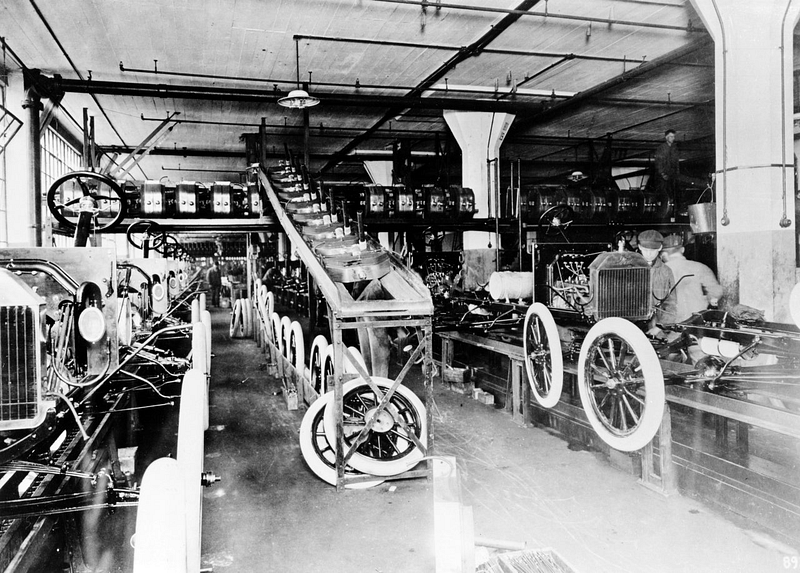
Address: 91 Manchester Ave, Highland Park, MI 48203
When the Piquette plant was bursting at the seams, I built this massive ‘factory’ and conducted a historic experiment. One day in 1913, we tried tying a rope to a car chassis and dragging it along while assembling parts. At first, it moved too fast, causing workers to fall over — it was total chaos. But eventually, when we set a waist-high conveyor belt moving at 44 inches per minute, we witnessed a miracle: the assembly time dropped from 12 hours to just 93 minutes. This system, where the worker stays put and the work comes to them, forever liberated humans from the grueling labor of heavy transport.
Designing the ‘flow of work’ is more important than just working hard. If your employees are spending time walking or looking for things rather than working, you are essentially paying for their ‘stroll.’ Reducing wasted motion by even one second is far more valuable than earning one more dollar.
3. Employment Office Site at Highland Park
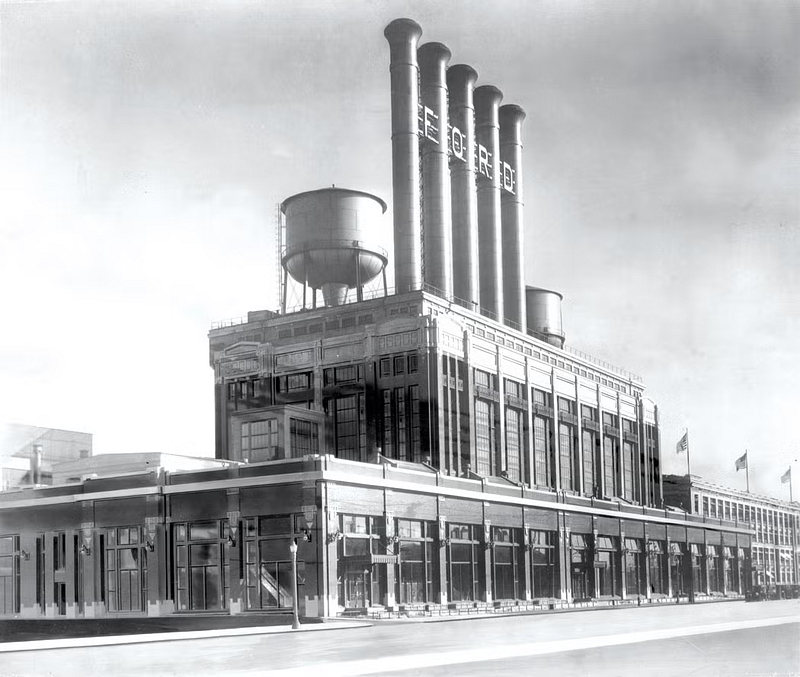
Address: Highland Park Plant Complex
In January 1914, when I announced the “$5 work day,” the world mocked me, saying I was crazy. At the time, the average daily wage for workers was barely over $2, so competitors cursed me, predicting my imminent bankruptcy. However, the day after the announcement, despite freezing temperatures, over 10,000 job seekers flocked to the factory like clouds, to the point where we had to use fire hoses to manage the crowd.
I wasn’t giving them charity. Receiving generous pay, they stopped quitting, their skill levels rose, and they began using that money to buy the very cars they made.
Wage cuts are what the dumbest managers do. Treat your employees as partners and enrich their lives, and that energy will return directly as product quality. A business maintained by low wages is like a castle built on sand; it collapses with the smallest wave.
4. John R. Street (within the Plant)
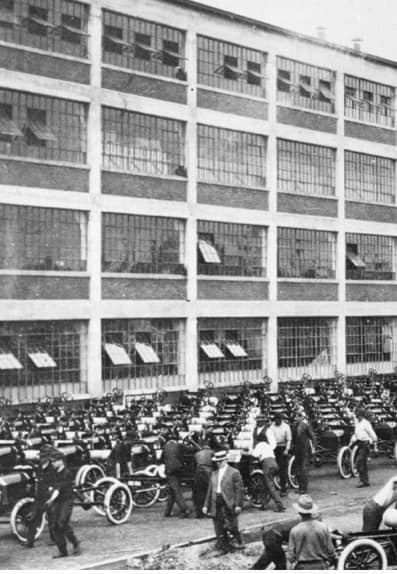
Address: Highland Park Plant (Running through the complex)
This street, cutting through the center of the factory, was not just a road but the ‘Main Street’ of our operation. At the final 45th process, once the radiator was filled with water and the engine started, the newly born cars would roll out onto this street under their own power to head out into the world.
Whenever I looked at this place, I repeated to myself, “Inventory is a sin.” Any time raw materials spend sitting around before becoming a finished product and leaving is simply dead money. We perfected the art of speed, turning a lump of iron into a car — and into cash — in just three days.
Accumulated inventory is proof that your judgment was wrong and a signal that your capital is rotting. Let things flow without stopping. Speed is capital, and turnover is profit. Everything that stands still generates a cost.
5. Internal Transportation Dept
Address: Highland Park Plant (Conceptual)
The ceiling of our factory had monorails moving like a spiderweb, and the floor was equipped with gravity slides. I issued a strict order: “No worker shall lift or carry anything heavy.”
Thanks to this thorough system, people without legs or those who could not see were able to achieve the same productivity as anyone else from a seated position and receive a fair wage. A factory where machines do the hard labor and humans use only their skills and intellect — that was the vision I dreamed of.
True efficiency is not about excluding the weak, but creating a system where the weak can work just like the strong. If a task requires an expert, the design is wrong. Break tasks down and improve tools to build an inclusive system where anyone can contribute.
Epilogue
We have seen how Ford resolved bottlenecks and increased efficiency. He improved productivity by reducing walking time and created a market by raising wages. This was not merely technical progress, but a revolution born from a deep understanding of human nature.
What is the ‘wasted motion’ in your business? The eye that can identify that is the very essence of management.
Author Linkedin