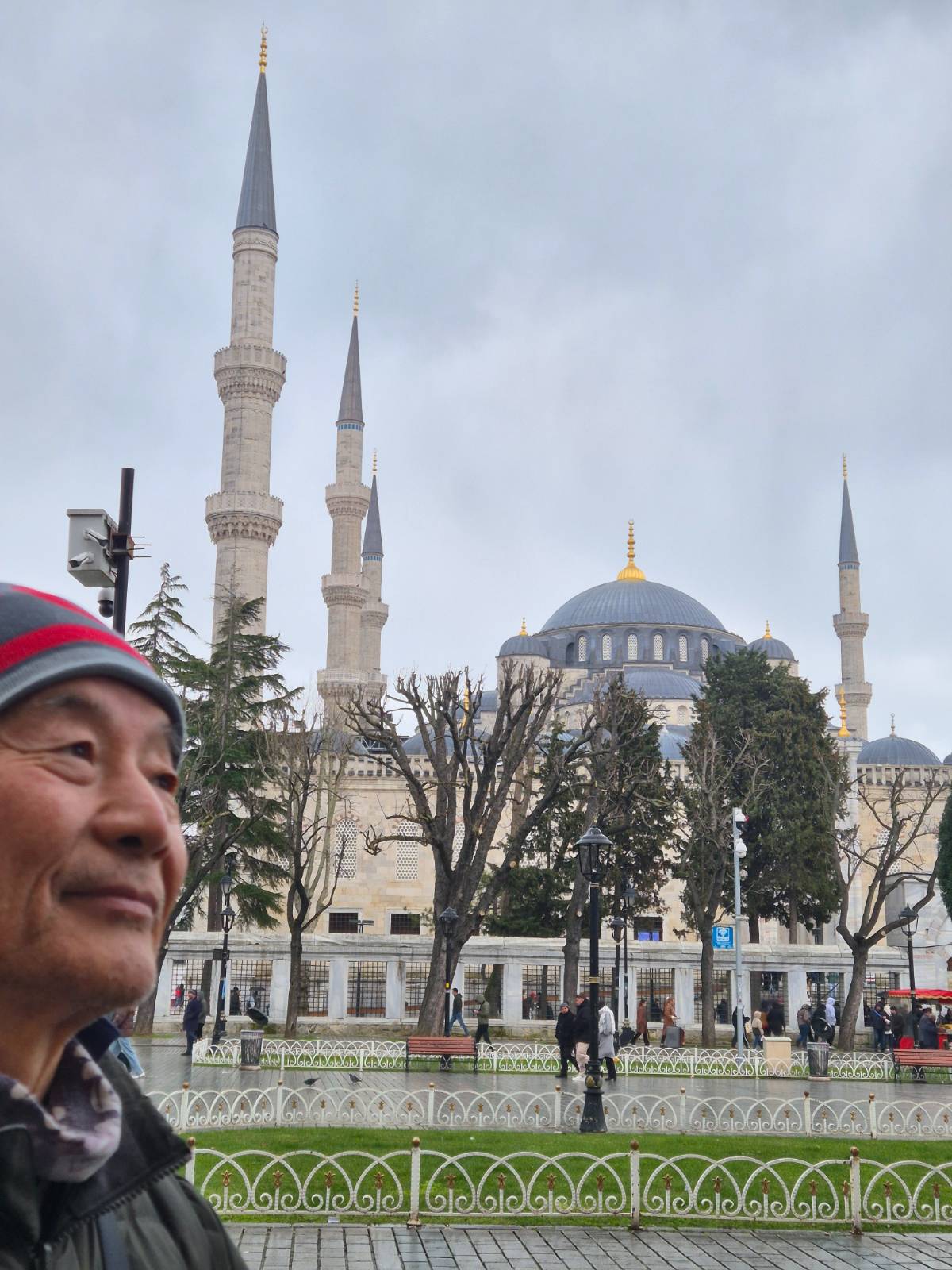
Layers of Millennia — Istanbul, Türkiye
Behind the Peeled Wallpaper
[Series: Things That Don’t Crumble - Türkiye] Vol.3 Layers of Millennia
한국어 버전을 보고 싶거나, 이야기를 계속해서 받아보길 원하시는 경우 아래 페이지로 이동해주세요.
(작가 블로그 가기)
A Millennium of Bloodshed
Admission was a steep $80. To make matters worse, ongoing restoration had parts of the area covered in scaffolding. Did I really need to pay this much and go inside? I stopped at the entrance of Hagia Sophia, hesitating for a long time.
But the money and the mess were probably just excuses. The real reason was the fundamental fatigue weighing me down lately. Standing before such a massive and magnificent heritage, perhaps I just didn’t want to confront how small I felt.
“What am I even striving so hard for?
I’m not exactly going to build something this monumental anyway.”
I had already stepped off the rat race, realizing the emptiness of a world that forces you to step on others to climb the ladder. Yet, the moment I thought I had let everything go, a paralyzing cynicism took over. “If I’m not chasing the pinnacle of success or aiming for monumental achievements, what impact can I possibly make?” I was trapped in total apathy, convinced I couldn’t change a thing.
This ancient crossroad between Asia and Europe stood in stark contrast to me. Countless empires and powerful men had waged bloody wars just to claim this single patch of land. The colossal ambition of those who risked everything to conquer, clashing strangely with my own cold nihilism and self-deprecation.
Passing through the dark, cavernous entrance, I fall deep into thought.
Layers of Millennia
I stepped inside. I expected a freezing stone tomb, but the air was surprisingly warm. And what unfolded before my eyes was an entirely different world.
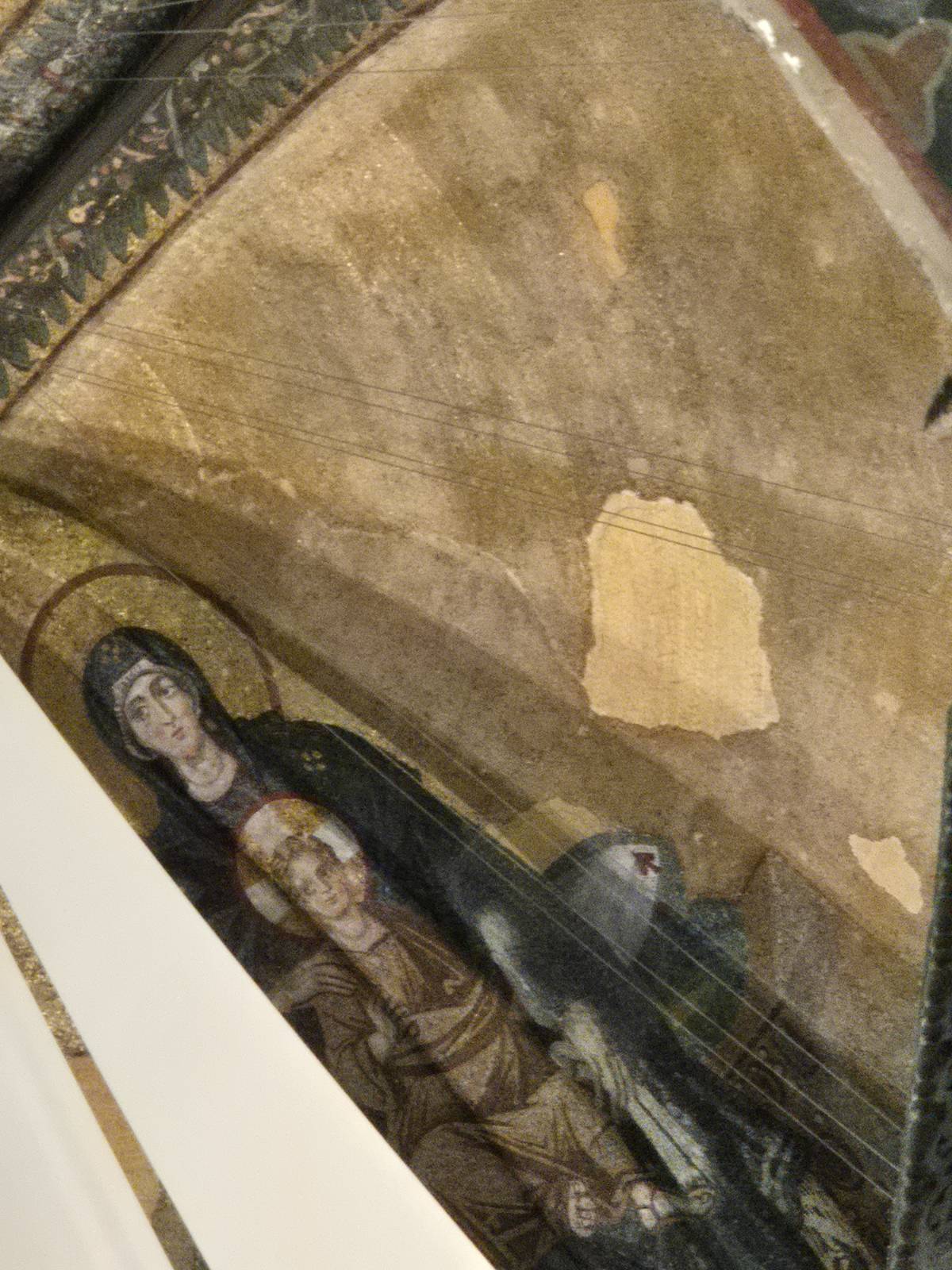
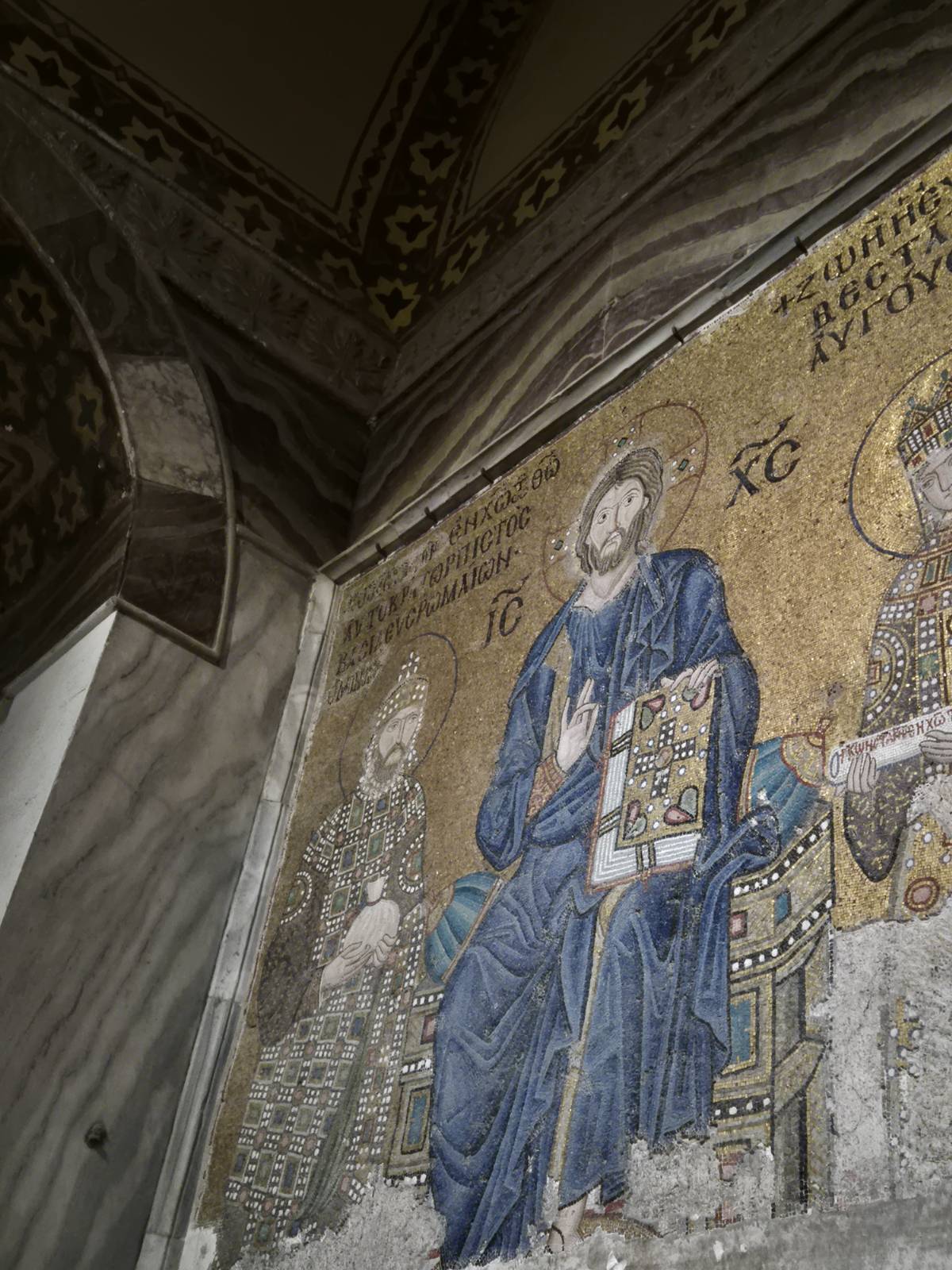
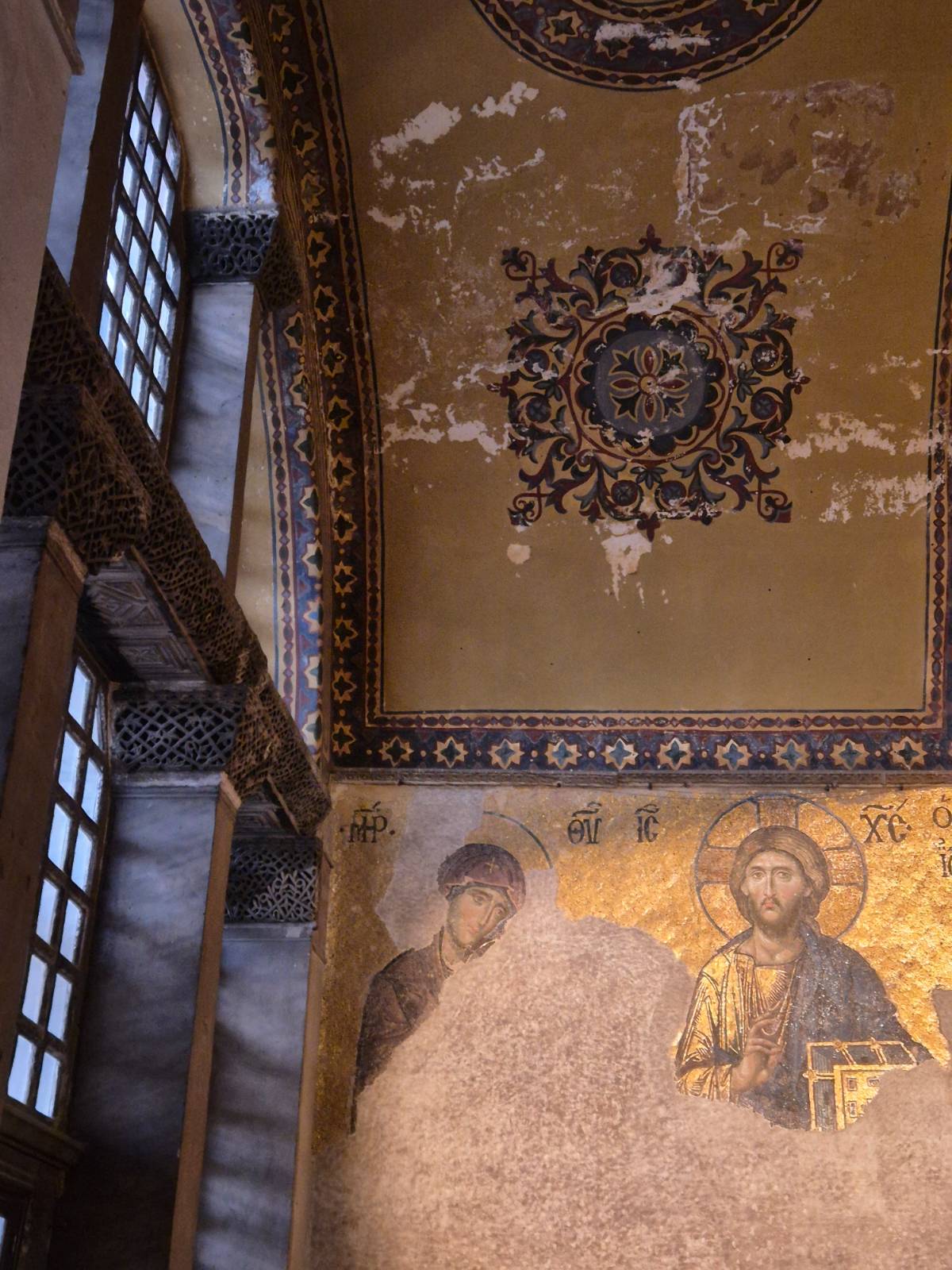
Between the construction tarps, the mosque’s wallpaper had peeled away. Beneath it, Christian frescoes of the Virgin Mary and Jesus stared back distinctly. And along that overwhelming wall, massive black medallions covered in Arabic calligraphy hung proudly.
It was like a dangerous game of territory, shouting, “This is our land now.” A trace of radical violence—Islamic motifs plastered over the heart of Christendom. I could almost feel the pain of the powerless, forced by the logic of power to convert from Christian yesterday to Muslim today.
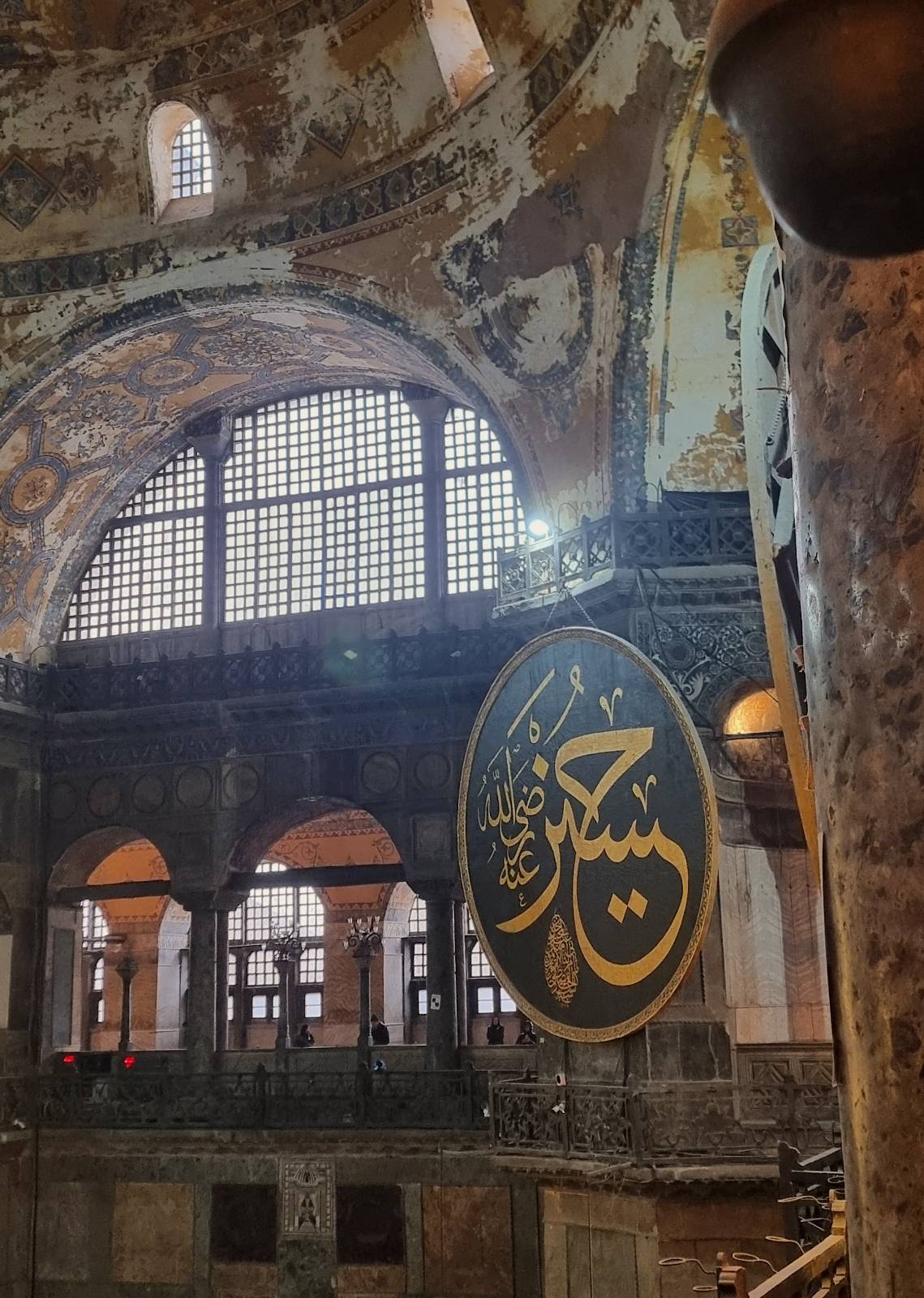
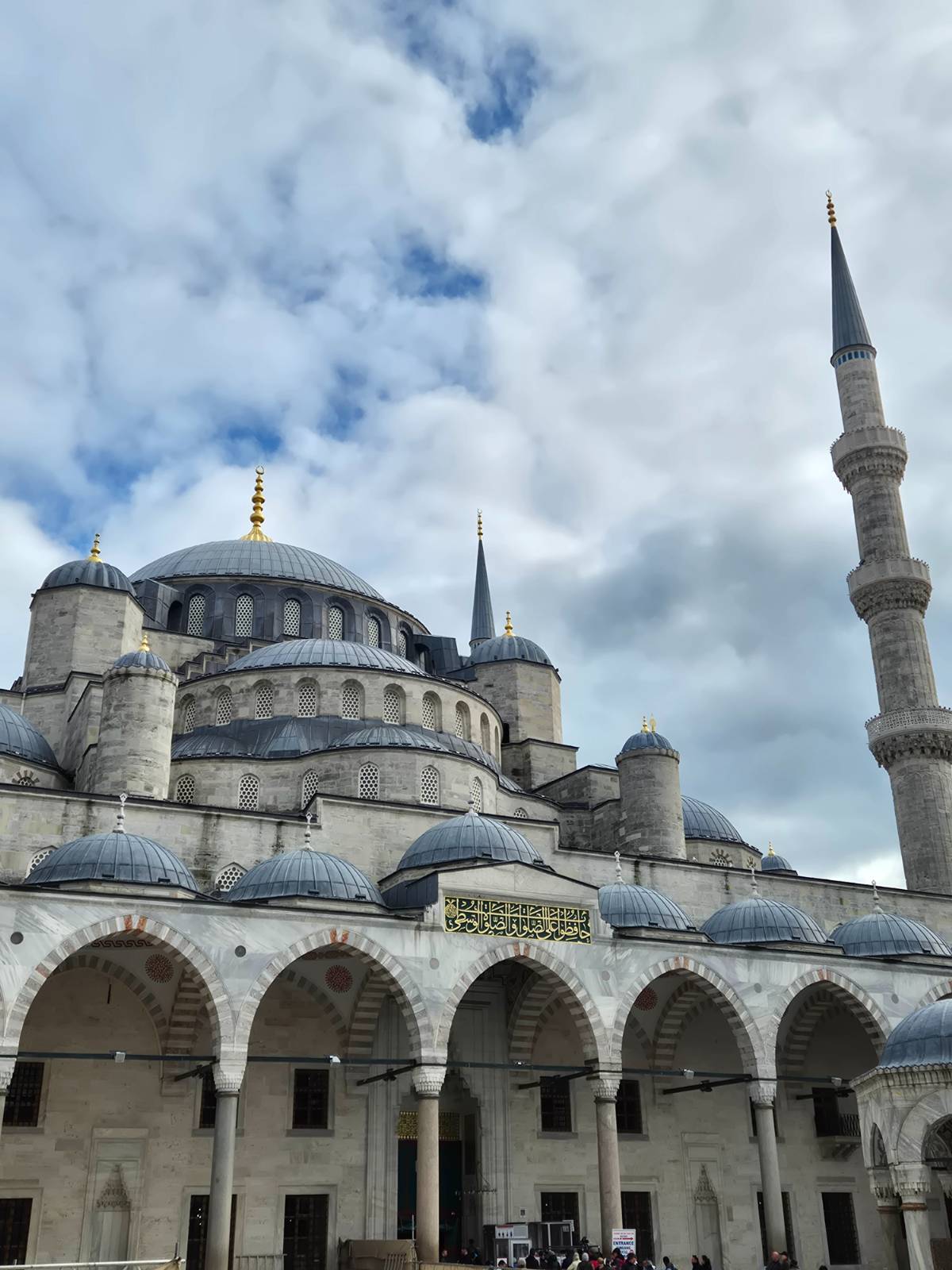
Yet, it seems even those conquerors stayed their swords before this breathtaking beauty. The marching armies of the Ottoman Turks who took Constantinople in 1453 couldn’t bring themselves to tear the building down completely. Ultimately, instead of destroying it, they painted over it. The result is this beautifully bizarre coexistence of alien elements right before my eyes. A layered history of millennia that could never exist if only one culture or religion had survived.
I let my mind jump across the centuries. Think of those mighty emperors who obsessively craved power and victory. Those who seemed eternal have all vanished, returning to a handful of dust. Only these stones—built by nameless hands—remain, silently outlasting time to meet us here today.
Things That Sparkle
Before this staggering history and space, my petty cynicism shattered.
Cold walls touched by people thousands of years ago. The chilling reality that time reduces even the greatest conquerors to ashes. In the face of eternity, I had merely been throwing a pity party over my fleeting failure to become “someone great.”
Your life doesn’t only matter if you achieve something monumental.
The heavy tension drops from my shoulders.
“There is nothing better for a person than to eat and drink and find satisfaction in their own toil.”
Standing before Hagia Sophia—a majestic, blood-stained marvel that survived by taking scars and being painted over—that wisdom from King Solomon I recalled in Kyoto years ago resurfaced, lifting me from rock bottom. And then, a strange sense of liberation rushes in.
The legacy we truly need to leave behind isn’t about world-shattering achievements. Our lives aren’t only meaningful when we crush the competition, destroy the old, and chisel our names into history.
Ultimately, what remains for me is not some grand power or title. It’s only the history of what I’ve learned and painted over my past, and how I’ve lived my daily life with the people beside me.
Why did I feel so worthless just because I wasn’t doing something “monumental”? Using the excuse that my daily life wasn’t changing the world, had I carelessly brushed aside my precious routine and the people I love?
How long had I been lost in thought? I turn my head, startled. There stand my beloved family—my dad and my brother—pointing at the ceiling, looking up with eyes full of wonder.
“Pfft—”
The raw vitality of our everyday lives, which had been hidden behind the conditioned obsession with greatness and the resulting cynicism. Those sacred frescoes that waited silently for centuries behind peeling mosque wallpaper. All of it is now vividly reflected in those small, sparkling things. I catch myself smiling back at my family.
(Fin.)